

















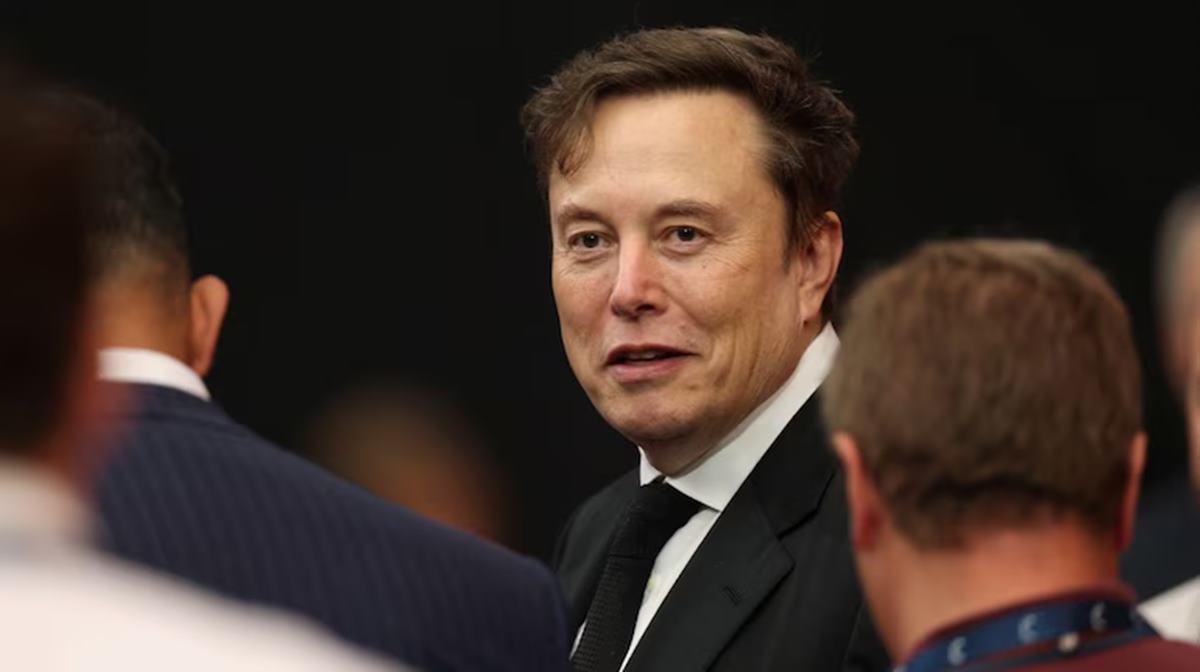
Elon Musk values employees who can deliver “10 times” the output of an average worker, former Tesla president Jon McNeill said, offering a rare insider view into how the billionaire builds high-performing teams.
McNeill, who served as Tesla president from 2015 to 2018, wrote in his book, The Algorithm, that Musk is deeply selective about hiring and prefers to work only with “world-class talent”—individuals capable of outsized, order-of-magnitude contributions.
Rather than incremental productivity gains, Musk seeks employees who can drive exponential impact. The emphasis is on people who can think independently, solve complex problems and deliver results at a scale far beyond the norm.
“He’s a pretty uniquely-wired individual, obviously,” McNeill told Fortune. “He’s thinking about stuff at a depth, constantly, and he frees up time in his day to think about these big challenges, and then figures out a way to go after them.”
What defines a ‘10x’ employee
But not everybody can work inside Musk’s high-pressure ecosystem.
“He demands to only work with world-class talent,” McNeill told Fortune. He described the kind of employees Musk values as “10Xers”—people who deliver 10 times the output of an average worker when challenged.
According to McNeill, these high performers are not just technically strong but share a distinct mindset: they question assumptions, focus on first principles and move quickly to execute.
“We made so much forward progress because the capabilities of our people were so high,” he added. ”It was like asking an army of completely special horses, and you asked them to go see these objectives, and they just do it. And then come back hungry for more.”
The system behind the philosophy
The hiring philosophy ties into Musk’s broader operating framework, which McNeill distilled into a five-step “algorithm”: question requirements, eliminate unnecessary steps, simplify processes, accelerate timelines and automate last.
This framework, McNeill said, allowed Tesla to tackle manufacturing bottlenecks and scale rapidly during its critical growth phase, including the rollout of the Model X and Model 3.