













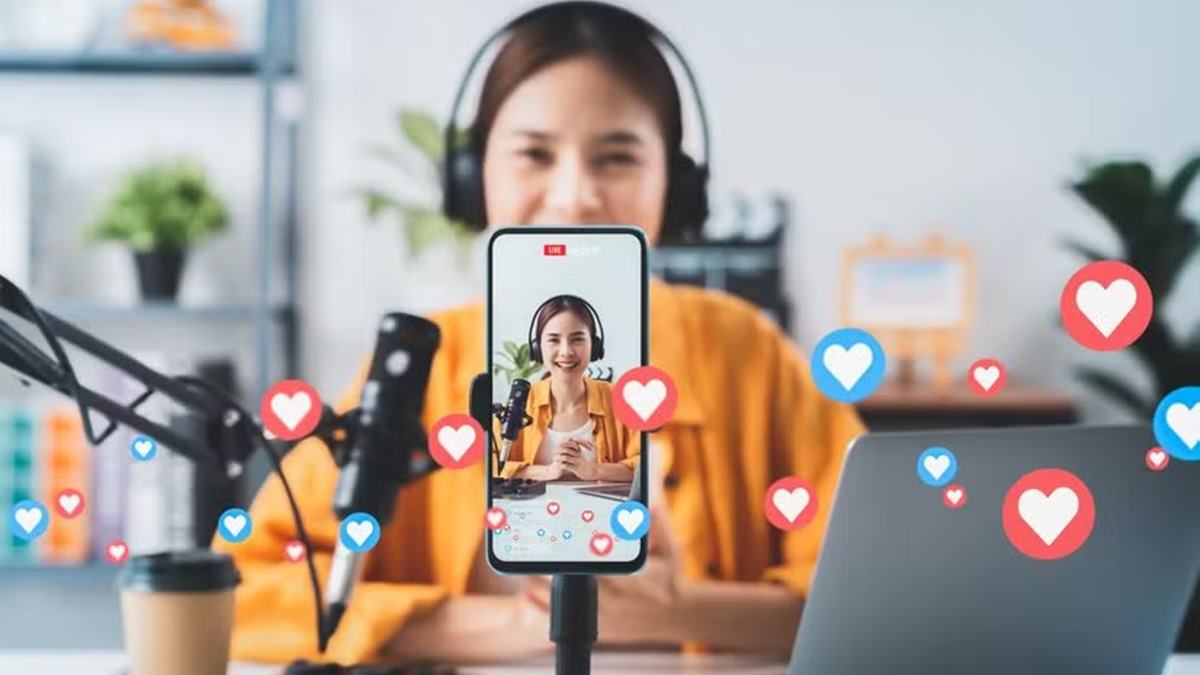
For years, brands relied on influencers, content creators and advertising agencies to create content and connect with consumers online. Now, many are hiring creators directly and building these capabilities in-house.
Across sectors ranging from FMCG and beauty to fintech and e-commerce, companies are hiring content creators, video editors, social media specialists, community managers and creator strategists as full-time employees. What began as a gig-driven creator economy is steadily becoming a structured employment category. The shift is being driven by the rise of short-form video, social commerce, community-led engagement and the need for brands to produce content continuously, rather than through occasional campaigns.
Creator hiring moves into the mainstream
According to global job search engine and hiring platform Indeed, the share of job postings in India requiring content creation skills, including content creators, influencers and related marketing and social media roles, rose 919 per cent between 2020 and early 2026.
Roles that made up roughly one in every 1,000 marketing jobs in 2020 now account for nearly one in every 100. The data suggests creator hiring is moving from a niche requirement to an embedded function within marketing organisations.
“When a creator represents your brand, trust is your biggest asset and your biggest risk. That’s why companies are moving fast to bring creators in-house. Employers aren’t just looking for reach anymore; they’re looking for accountability,” said Saumitra R Chand, career expert at Indeed.
According to Indeed, only 40 per cent of creator-related positions are classified as influencer roles. The remaining 60 per cent are spread across marketing, video production, community management and content operations, suggesting that creator talent is becoming embedded across organisations.
Rohan Sylvester, talent strategy advisor at Indeed India, said expectations from creators are also changing. Companies increasingly want measurable business outcomes such as engagement, conversions and brand consistency, rather than just audience reach, he said.
New creator job titles emerge
Kartik Narayan, CEO, Apna.co, told Business Standard that brand coordinators and video editors are among the fastest-growing creator-focused roles.
“We are also seeing increasing interest in roles such as script writers, thumbnail designers and short-form content specialists as brands continue to invest in content-led consumer engagement,” he said.
According to Apna.co, employers are seeking a mix of creative and technical skills, including video editing, Adobe Premiere Pro, Adobe After Effects, content writing, brand marketing, digital marketing and social media marketing.
Narayan said companies are no longer hiring purely for creativity. “The future creator professional is part marketer, part storyteller, and part data interpreter. Content is no longer being viewed as a marketing byproduct. It is increasingly becoming a strategic business asset influencing discovery, trust, commerce, and customer retention,” he said.
Neeti Sharma, CEO at TeamLease Digital, told Business Standard that nearly 60 per cent of creator-related hiring now sits outside traditional influencer titles.
“Marketing executives account for 20 per cent of creator roles and interns for 17 per cent, reflecting structured team-building over one-off campaigns,” she said.
Which sectors are leading?
According to experts, the strongest demand is coming from consumer-facing sectors such as FMCG, fashion, lifestyle, beauty, personal care, gaming and quick commerce. Demand is also rising in fintech, healthcare, wellness, edtech and parenting-focused businesses.
Dr Jitin Chadha, pro-chancellor of University of Design, Innovation and Technology (UDIT), told Business Standard that organisations increasingly value a creator mindset across industries. “The demand today is increasingly centred around people who can identify opportunities, solve problems, communicate ideas and create value. This demand is visible across technology, finance, education, healthcare and manufacturing.”
Why brands want creators on payroll
Vivek Goel, chief business officer at FirstCry, said creator-led content has become a critical part of the company’s marketing strategy.
“Brands are building stronger internal creator capabilities because content today needs to be faster, more frequent, and more platform-specific,” he said.
Goel said creator-led content often drives stronger engagement than traditional advertising. “It feels less like advertising and more like a real conversation. For categories like parenting and baby care, this matters even more because parents respond to content that explains, demonstrates, and reassures, not just content that sells,” he said.
Industry experts said in-house creators also give brands greater control over messaging, stronger consistency and closer alignment with business goals.
Are talent agencies under threat?
Industry executives and experts said the future is likely to be hybrid, rather than one in which agencies are replaced altogether.
Goel said agencies continue to play a vital role in nurturing creator talent and expanding the creator ecosystem. “This does not mean agencies or external influencers are being replaced. Brands must become more agile in adjusting the creator and influencer mix depending on the objective, audience and platform,” he said.
Instead of losing relevance, agencies are evolving into creator-management firms, creator studios and strategic advisory partners.
What does it mean for creators?
For creators, the shift presents a trade-off between flexibility and stability. Independent careers can offer higher earnings for top performers, but income remains volatile. Corporate roles offer predictable salaries, career progression and access to larger teams and resources.
According to TeamLease Digital, in-house content creators with four to five years of experience earn around ₹7-8 lakh annually. Influencer marketing managers earn ₹8-10 lakh, while social media strategists earn ₹9-12 lakh a year.
The challenge for aspiring creators is that content creation alone is no longer enough. Sharma said employers increasingly seek professionals who combine storytelling, audience analytics, AI-assisted workflows, SEO and performance measurement.
Chadha said the formalisation of creator jobs represents something larger than a hiring trend. “This is not merely a hiring trend but points towards the formalisation of a new growth engine within India’s economy,” he said.
As companies increasingly treat content as a business function rather than a marketing activity, the creator economy is entering a more structured phase. Experts says its next chapter may be shaped as much by salaried creator professionals as by independent influencers.