
















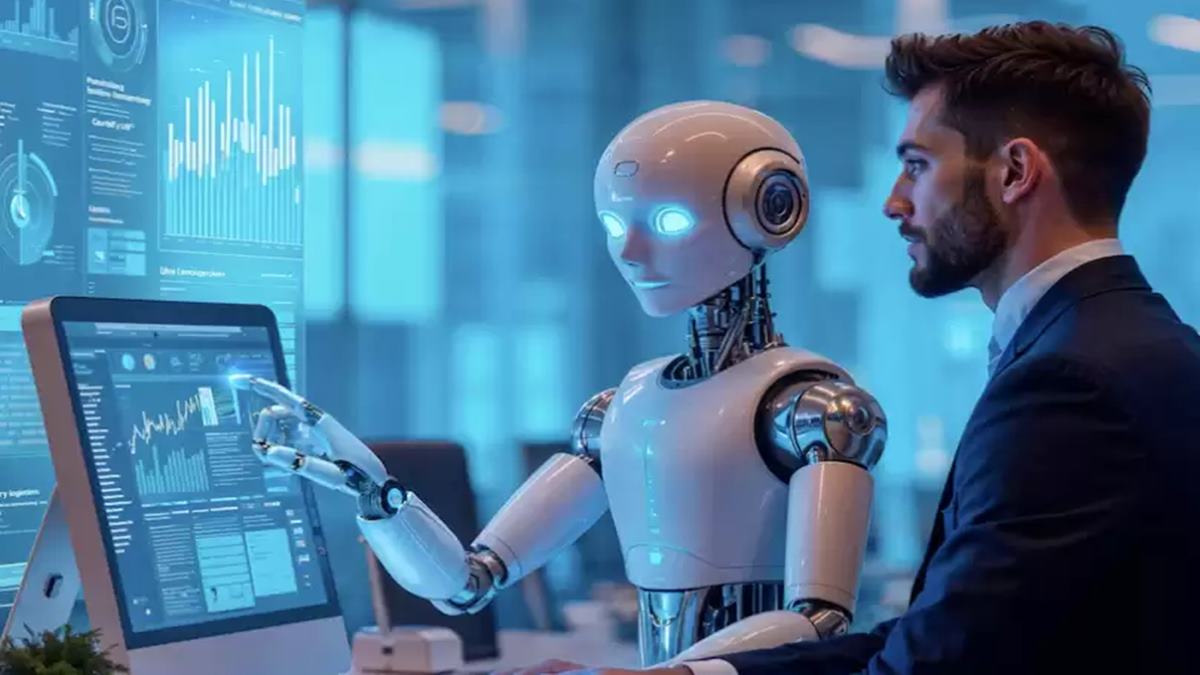
The current job market is undergoing an evolution in which the old expectations about how people get jobs are being redefined. Previously, that expectation was for the vast majority of jobs; you needed at least a college degree (and sometimes even advanced degrees like MBAs or certifications). With the rapid advancements in AI in terms of the creation of jobs and job skills, this is being challenged as students/professionals are now questioning what will be more “valuable” in five years—acquiring job skills using AI or acquiring a degree.
The reality is that hiring practices are shifting to a more practical approach for companies as they tend to look less at academic credentials when hiring someone than they once did, and this shift is happening because industries have changed at a much faster rate than our schools/traditional education systems have. In the time frame from when an individual graduates to when they are looking for a specific job, they may have been taught information that is already out of date, whereas AI-related job skills continually evolve rapidly and therefore closely mirror what is needed in the industry on a real-time basis.
The use of AI is not just for professionals who work in technology; this revolutionary technology is now being implemented in many different industries, including marketing, finance, healthcare, design, and even the educational system.
With the aid of AI-powered tools, employees can now complete tasks in a quicker, smarter, and more efficient manner. Because of this, many companies are actively seeking out people who have experience using various AI-based tools in an effective manner. Individuals who can take advantage of AI by automating processes to free up time, analyzing historical data to see how an organization has performed in the past and then predicting where they will perform going forward, or improving overall work productivity through the use of AI, provide themselves with competitive advantages in today’s job market. The fact that many businesses are now conducting searches for people with AI-related skills does not mean that degrees are no longer valuable; they will continue to play significant roles in teaching the fundamentals of a subject. Degrees provide structured thinking, problem-solving, and self-discipline for future employees. For example, in the careers of medicine, law, or core engineering, graduates earn degrees in order to enter into their chosen field(s). In other careers, a degree can provide foundational knowledge and credibility that help candidates to be competitive.
As time goes by, the value of each factor continues to change. For some people in the past, a degree was sufficient to find a job; however, today the degree is only part of your overall profile. In addition to having a degree, employers will also look for proof of competence in some way (e.g., real projects, internships, certifications, practical experience). This is where AI skills become enormously important. A college student who has actually created projects using various AI tools and has solved real-world problems will be more impressive than the student who has only seen academic success.
A second key point is that the future job market will not reward employees who only rely on what they learned in the past; it will reward those who continue to learn. AI itself continues to change every day. As a result, all professionals in the field of AI should continually enhance their abilities. To this end, tracking how to use and apply AI is not just an exercise in mastering a new ability; it involves the development of a continual growth mindset. Finally, the changes in degrees will continue. Many institutions are updating their degrees to include numerous AI, data science, and digital skill courses. With the rise of short-form and online certificate programs, higher education has become more flexible than ever before.
This illustrates that education has developed to accommodate the changing requirements of the workforce.
As we move forward into the future (the next five years), the most accomplished professionals will not be those who select one or the other (degree versus AI); rather, they will be those who successfully join the two together. A degree provides vision, while AI provides speed and relevancy. When combined, they will form a very impactful duo. The author is Founder, Learning Spiral.