














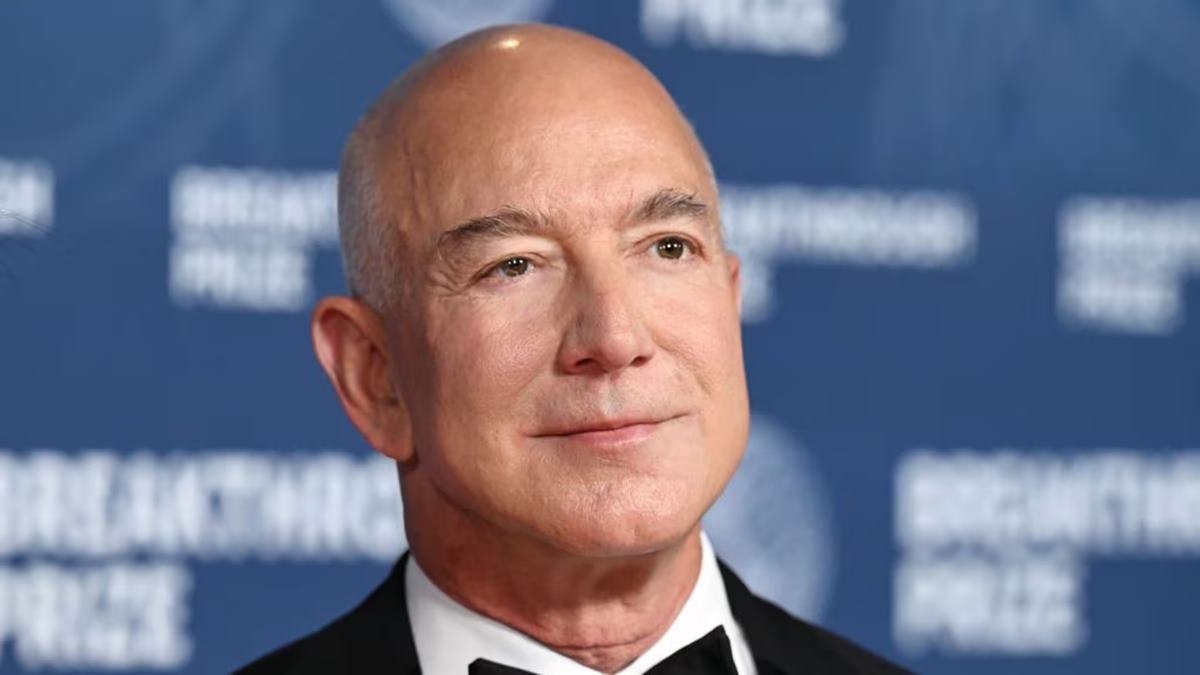
As the The Washington Post grappled with mounting financial pressures and a shrinking subscriber base, its owner, Jeff Bezos, offered an unapologetic defense this week of the sweeping layoffs that have reshaped one of America’s most storied newsrooms.
Speaking in a televised interview with CNBC’s Andrew Ross Sorkin, Bezos argued that even a newspaper backed by one of the world’s wealthiest men could not survive indefinitely as a subsidized civic project. The paper, he said, must prove its value in the marketplace.
“The Post needs to be a profitable enterprise that stands on its own two feet,” Bezos said, responding to criticism that the cuts — which eliminated roughly 30 percent of staff across departments including sports, metro, books, photography and foreign bureaus — undermined his longstanding claims that journalism serves as a public trust.
The layoffs, announced earlier this year, reverberated across the media industry, not only because of their scale but because they struck at the core of the newspaper’s identity. Entire desks were hollowed out as executives moved to stem years of financial losses and declining readership.
Sorkin pressed Bezos on why a billionaire with an estimated fortune of roughly $270 billion, according to Forbes, would not simply absorb the losses.
“But does it?” Sorkin asked after Bezos insisted profitability was essential. “Some people say it should be a trust.”
Bezos rejected the idea that journalism could remain relevant without market validation.
“If people won’t pay for our product, it’s not a good enough product,” he said. “It’s got to be something that people will pay for, because that’s a signal. It’s a signal that we’re providing a relevant service.”
In making his case, Bezos pointed to The New York Times as evidence that a modern news organization could still thrive financially while producing consequential journalism.
“You guys are doing very well financially, and you’re providing a service that people are willing to pay for,” Bezos told Sorkin, who also writes a financial column for the Times. “We can do that, too.”
Bezos said he deliberately avoided involvement in deciding which employees or departments would be cut, instructing executives instead to “follow the data.” But he drew one clear boundary: investigative journalism.
“The heart of the Post is investigative reporting,” he said, adding that the newspaper’s accountability reporting would remain protected despite the broader retrenchment.
Even after the reductions, Bezos noted, the newsroom remains larger than it was during the eras that produced the paper’s landmark investigations into the Watergate scandal and the publication of the Pentagon Papers.
“The Post is going to continue to be an important institution,” Bezos said. “In fact, it’s going to be a more important institution because of this financial discipline.”
He also cited the newspaper’s recent Pulitzer Prize for Public Service, awarded for its reporting on efforts by the Trump administration to reshape the federal government, as evidence that the paper’s journalistic ambitions remain intact.
Still, questions about Bezos’s stewardship of the newspaper have intensified in recent years, particularly as the paper struggled to sustain the subscriber surge it enjoyed during President Donald Trump’s first term. Bezos purchased The Washington Post in 2013 for $250 million and initially expanded the newsroom after restoring profitability.
That relationship with readers and staff became more strained in 2024, when Bezos faced backlash for blocking the editorial board’s planned endorsement of Kamala Harris ahead of the presidential election ultimately won by Donald Trump.
Sorkin asked Bezos directly whether the complications of owning a major newspaper while also controlling sprawling business interests had diminished his desire to remain in the role.
Bezos did not waver.
“When I bought The Post, it was very unprofitable,” he said. “We turned it around in two years, it was profitable for six years. I put all that money back into The Post and grew the newsroom.”