










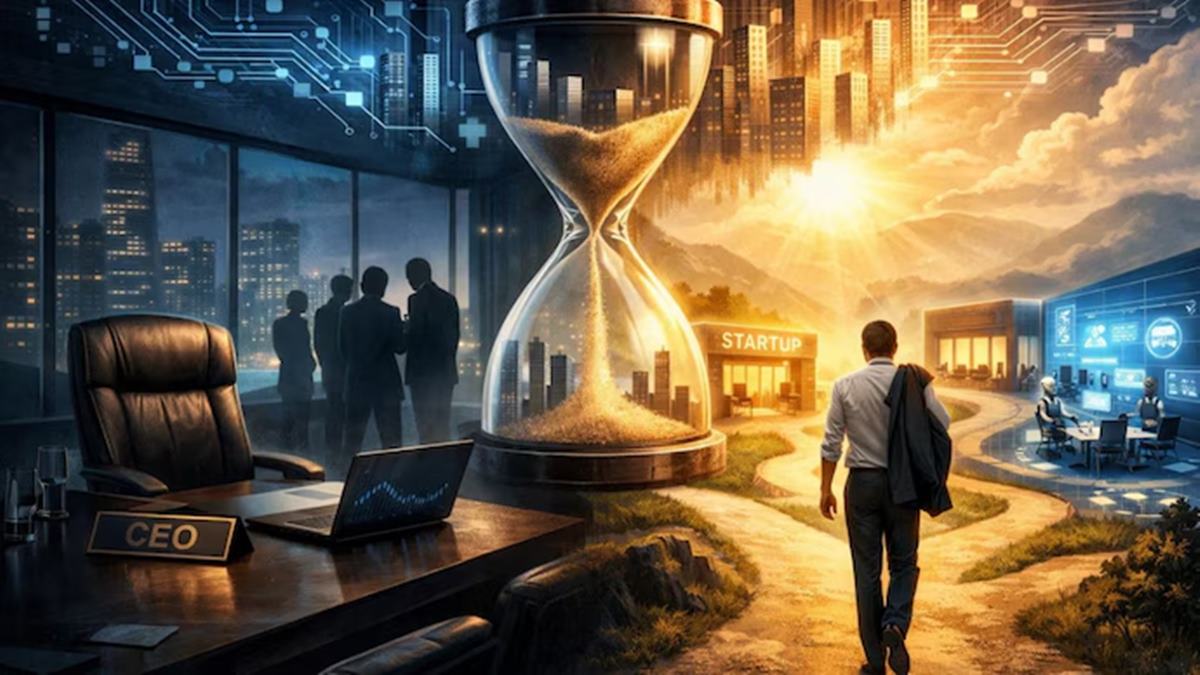
The AI revolution is no longer stopping at middle management; it’s knocking on the CEO’s door. In 2026, companies aren’t just restructuring teams; they’re rethinking leadership itself.
As AI reshapes strategy, even top executives are stepping aside, signalling that the future may belong to leaders built for reinvention.
Moves involving Coca-Cola and Walmart have only intensified the debate.
Ashish Dhawan, Senior Partner at AIMS International, said the nature of CEO tenure itself has changed. “In the earlier days, we used to see the CEO serving his term till retirement, but times have changed. The corner office today comes with an expiry date, intentional or forced,” he says.
“CEO exits are no longer just about performance; they’re increasingly strategic, driven by shifts like AI, digital reinvention, or the need for a different leadership muscle for the next phase. In family-run groups, this can also depend on board or owner expectations,” he adds.
One company he knows changed three CEOs in three years. He added that global companies are already signalling this shift, noting that global giants like Coca-Cola and Walmart are aligning leadership transitions with future-ready capabilities rather than past success.
WHAT HAPPENS WHEN A CEO IS EFFECTIVELY LAID OFF?
When a CEO leaves, it is rarely framed as a layoff. Companies typically use softer language such as “stepping down,” “transitioning,” or “mutual decision.” Behind the wording, however, the mechanism is similar to a job termination; the board decides a new direction requires new leadership.
In many cases, the departure is negotiated. The CEO may remain during a transition period, move into an advisory role, or exit with a severance agreement. These arrangements are designed to maintain market confidence and protect the company’s reputation while leadership changes.
Unlike traditional layoffs, CEO exits are often planned resets. Boards may want someone with AI transformation experience, restructuring expertise, or a different growth strategy. The shift is less about failure and more about timing.
While leadership exits are typically structured, employee layoffs often unfold very differently. A survey by Blind found that 72 percent of Indian professionals who experienced or witnessed layoffs were informed on the same day or just a day before their exit.
Only 18 percent reported receiving advance notice of one to three months.
The survey also revealed widespread anxiety about job security.
About 53 percent of respondents fear being laid off within a year, while 91 percent said they feel unprepared to begin a new job search. More than half indicated they could support themselves for only three months if impacted, underscoring the financial vulnerability surrounding workforce restructuring.
ARE CEOs BEING REPLACED BY AI OR BY NEW EXPECTATIONS?
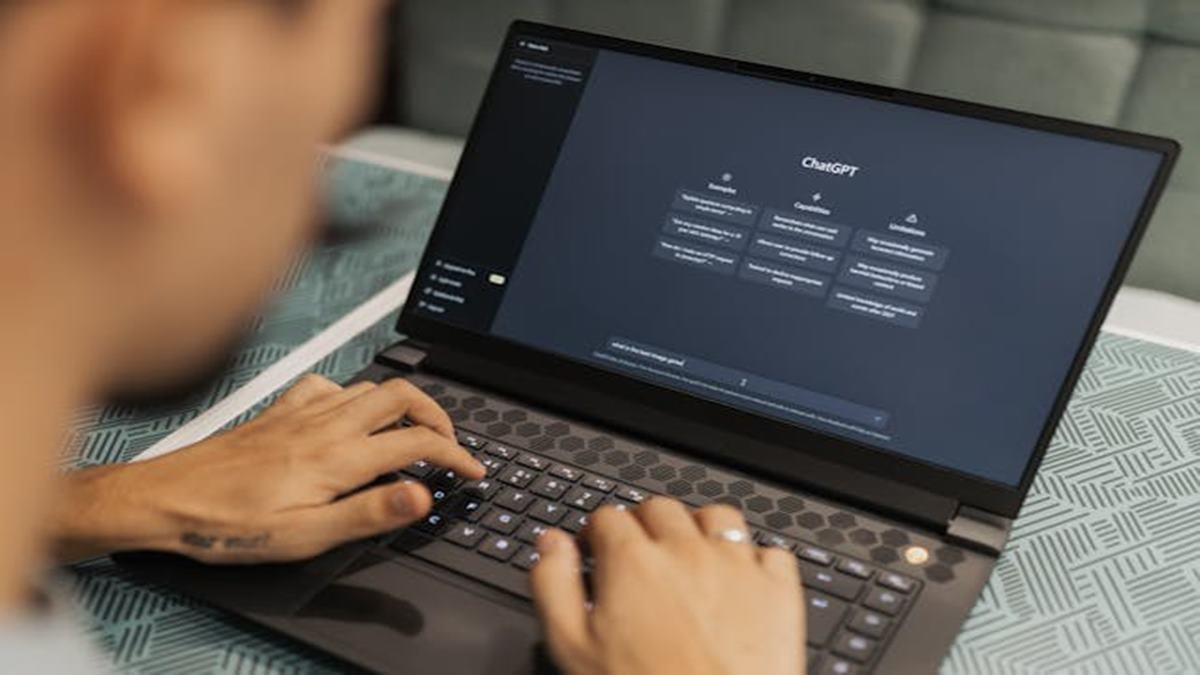
Artificial intelligence is not replacing CEOs, but it is redefining leadership. As companies reorganise around automation, data-driven decisions, and leaner operations, the profile of leaders required is changing.
The recent departures at Coca-Cola and Walmart reflect this shift, with both framed as strategic handovers for the next phase of AI-led transformation.
This environment is also shaping career decisions. A FlexJobs report found 43% of workers are trying to change fields this year, driven by layoffs, AI concerns, and work-life balance, signalling that both employees and leaders are repositioning for AI-driven workplaces.
At the workforce level, AI’s impact appears nuanced. A study by ICRIER, supported by OpenAI, found that generative AI is reshaping roles rather than causing mass layoffs in India’s IT sector.
WHAT DOES A CEO DO IMMEDIATELY AFTER STEPPING DOWN?
A CEO rarely moves from the corner office to unemployment overnight. Most transitions are structured and deliberate. Many remain temporarily to help with succession planning, while others move into advisory or chairman roles.
Some executives take a short sabbatical after years in high-pressure roles. Others begin building portfolio careers that include board memberships, investments, mentoring startups, or consulting on transformation strategy.
Because former CEOs possess strong networks and industry credibility, they typically pivot rather than search for traditional employment.
Ashish Dhawan notes that a CEO exit is increasingly becoming a repositioning phase rather than a fall.
“What happens next is not always a fall from grace. Many former CEOs re-enter as board members, private equity advisors, or take operating roles in smaller, high-growth companies where their experience compounds faster. Some pivot into investing or build portfolio careers,” he said.
He added that returning to a similar role is not guaranteed.
“Reappointment as CEO, especially at the same scale, is far from assured and often depends on timing, narrative, and networks. In the executive search industry, I’ve seen some leaders struggle after losing the role, while others quickly mould themselves for new opportunities.”
WHAT ARE THE CHANCES OF A CEO GETTING REHIRED?
Chances of being rehired into another CEO role are limited because there are very few positions at that level. Each opening attracts a tight shortlist of seasoned leaders, internal successors, and investor-backed candidates, making competition intense.
Since leadership transitions are infrequent and many firms prefer internal succession, even experienced former CEOs may wait months or years for a comparable role.
“In the interim, the smartest leaders don’t wait; they reposition,” Dhawan explains.
“They upgrade skills, build visibility in emerging areas, and actively shape their next mandate. The smarter ones are ready to take a salary cut or relocate to stay in the market. Because in today’s environment, even for CEOs, the role isn’t permanent, it’s transitional,” he further adds.
He explained that new-age companies are also looking for CEOs willing to put “skin in the game” by investing in equity alongside taking operational charge.
IS BEING LAID OFF AS A CEO A FAILURE OR A RESET?
In today’s business environment, it is increasingly viewed as a reset. CEO tenure is shortening, industries are shifting faster, and leadership expectations are evolving alongside AI adoption. What once looked like a career-ending event is now part of the leadership lifecycle.
Sarbojit Mallick, co-founder of Instahyre, says leaders must anticipate this possibility rather than react to it.
“The question reminds me of Intel’s former CEO Andrew Grove, who imagined this scenario and pivoted Intel from memory chips to microprocessors. He wrote about it in Only the Paranoid Survive. Current CEOs need a similar mindset when they are on the verge of being pushed out. They need to think ahead and anticipate what to do in such a scenario,” he says.
According to Mallick, the next move often involves entrepreneurship or startup leadership.
“The natural step for leaders is to start something of their own or join a startup aligned with their experience and worth scaling,” he adds.
WHAT DOES THE 2026 WAVE OF LAYOFFS SIGNAL FOR LEADERSHIP?
Layoffs across technology, retail, and corporate sectors signal more than cyclical cost-cutting; they point to a structural reset in how companies operate. Organisations are becoming leaner, automating aggressively, and flattening hierarchies.
In this environment, leadership itself is becoming more disposable, with even the corner office subject to change.
The debate sparked by departures at Coca-Cola and Walmart reflects this shift. AI is not only transforming workflows but redefining leadership mandates.
The CEO is no longer just an operator delivering steady growth, but a transformation architect expected to lead reinvention.
The assumption that CEOs are insulated from layoffs is fading fast.
As AI and restructuring redraw corporate hierarchies, CEO exits are increasingly framed as strategic pivots, less about failure and more about resetting leadership for the next technological cycle.