


















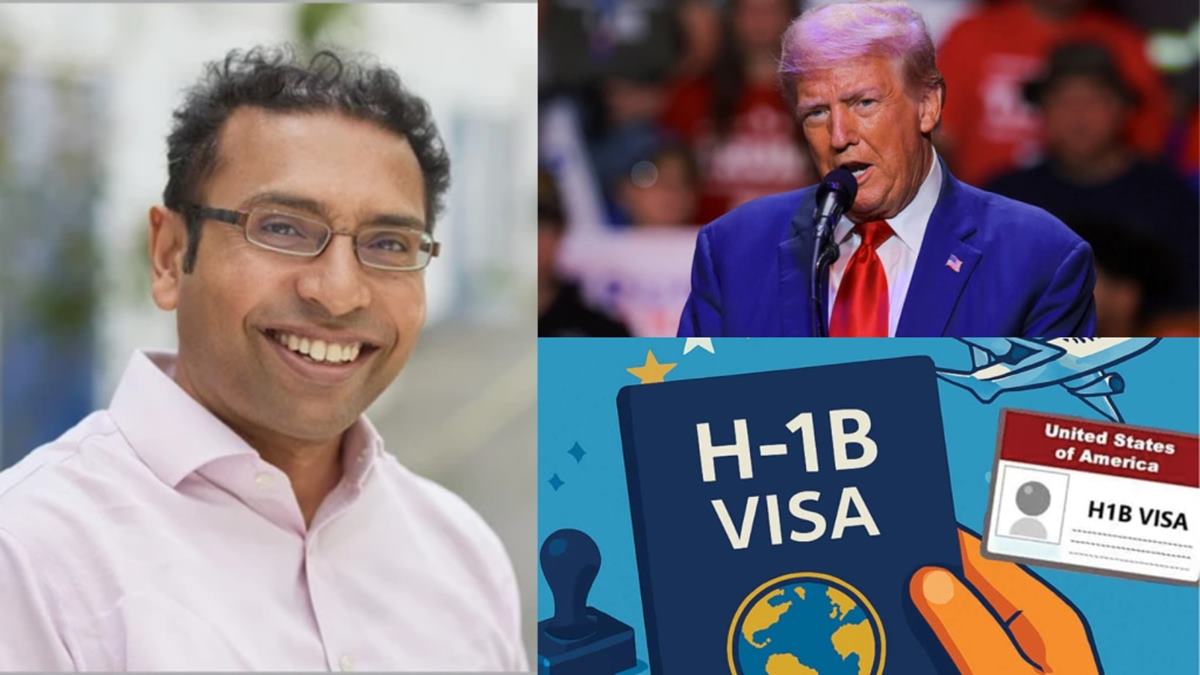
When Saurabh Mukherjea, founder and chief investment officer of Marcellus Investment Managers, appeared recently on Raj Shamani’s podcast, the conversation went far beyond markets and money. He explained why Indians, particularly Indian professionals in the US, are increasingly being cast as ‘villains’ in America’s economic story. He explained that people across countries want the same things, and when those desires are unfulfilled, politics looks for someone to blame.
Why are Indians blamed?
Whether American, Indian or Chinese, Mukherjea says that human aspirations are largely identical. People want financial security, social mobility, and a better quality of life including buying bigger homes, better cars. But when economic systems stop delivering these outcomes at scale, frustration sets in. That frustration, he explains, increases anger, anxiety and social conflict. And this is where politics enters the picture.
Drawing on the Girardian idea of scapegoating, Mukherjea says that leaders often rise not by fixing complex structural problems, but by offering emotional relief. The message will be directed as your suffering is not your fault, but someone else is responsible.
Why scapegoats must be visible?
According to Mukherjea, history shows that scapegoats are rarely the truly powerful. They are instead highly visible, relatively successful, but politically expendable. Mukherjea brings in examples that span centuries, from the crucifixion of Jesus to modern corporate boardrooms where a new CEO blames the old leadership for falling stock prices. In today’s American context, he believes that Indians fit this profile almost perfectly.
Indian professionals in the US are prosperous enough to provoke resentment, highly visible in technology, healthcare and management, minority, and therefore electorally weak and closely associated with globalisation, outsourcing and H-1B visas
This makes them a “safe” political target, one that can be attacked without meaningful political cost.
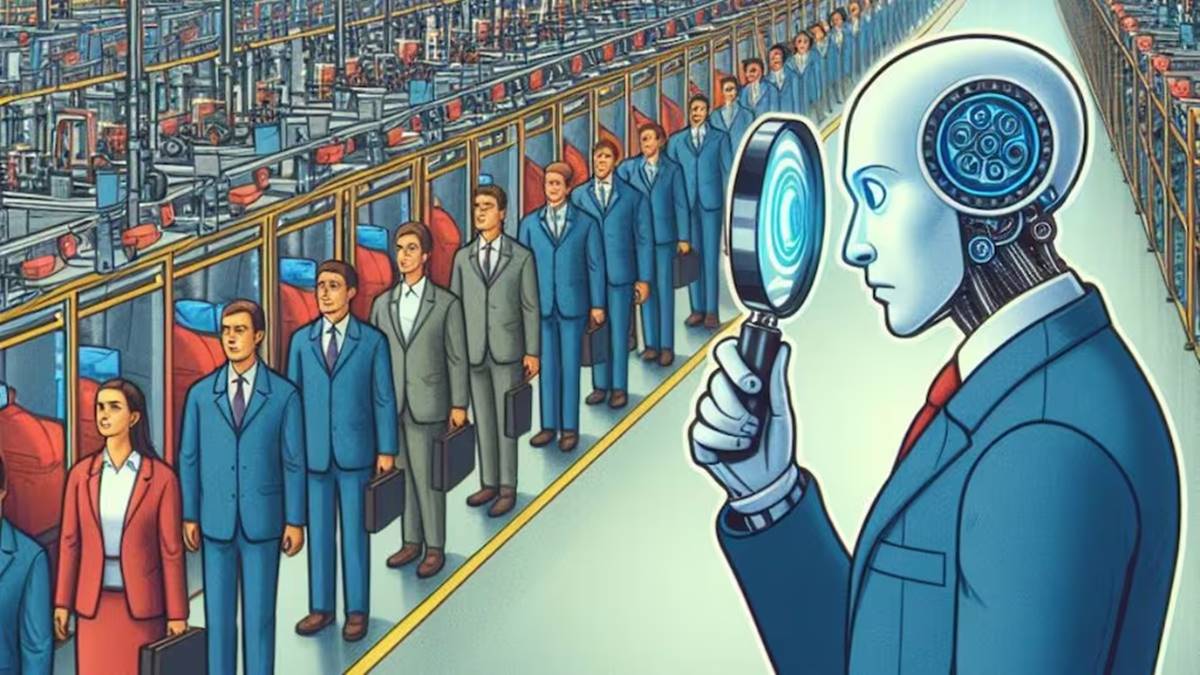
In such a scenario, scapegoating becomes a political shortcut. Instead of confronting the structural consequences of AI and globalisation, leaders redirect anger outward. According to Mukherjea, US policymakers have already recognised that India lacks leverage in this transition, just as China has. This, he says, explains why foreign investment flows are becoming harder to close and why economic pressure tactics are intensifying.
Trump’s election math
Mukherjea also explains about the transition in the identity of Indians in the period following Donald Trump’s electoral victory. Initially, he says, it was not clear that Indians would be singled out. But within months, US political strategists appeared to have settled on a familiar formula that is to energise right-wing voters, someone must be consistently targeted.
Mukherjea says, “When Trump initially won, it wasn’t obvious then that he would target us. That’s why when I said on your podcast on Jan 25 that he will come after us, a lot of people said, “No, you’re talking nonsense. He won’t.”
He further added, “Somewhere around February–March last year, their think tanks must have come up with this idea, we need to consistently target someone to win popularity with our right-wing supporters.” Indians are a solid target because they are prosperous, visible, and a minority. So let’s go after them. Create a whole mess around H-1B visas. Abuse them verbally. And then at a country level, slap tariffs on them.”
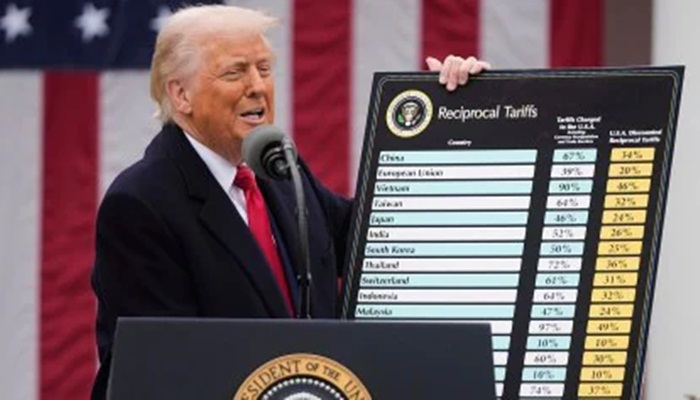
Hence, the result has been a steady escalation. Heated rhetoric around H-1B visas, verbal attacks on immigrants, and even economic measures such as tariffs. Each move is tested against voter sentiment.
From his reading of US media, including liberal outlets like CNN, this strategy has paid off. The narrative space has shifted, with talk of an “open season” on Indian professionals becoming increasingly mainstream.