














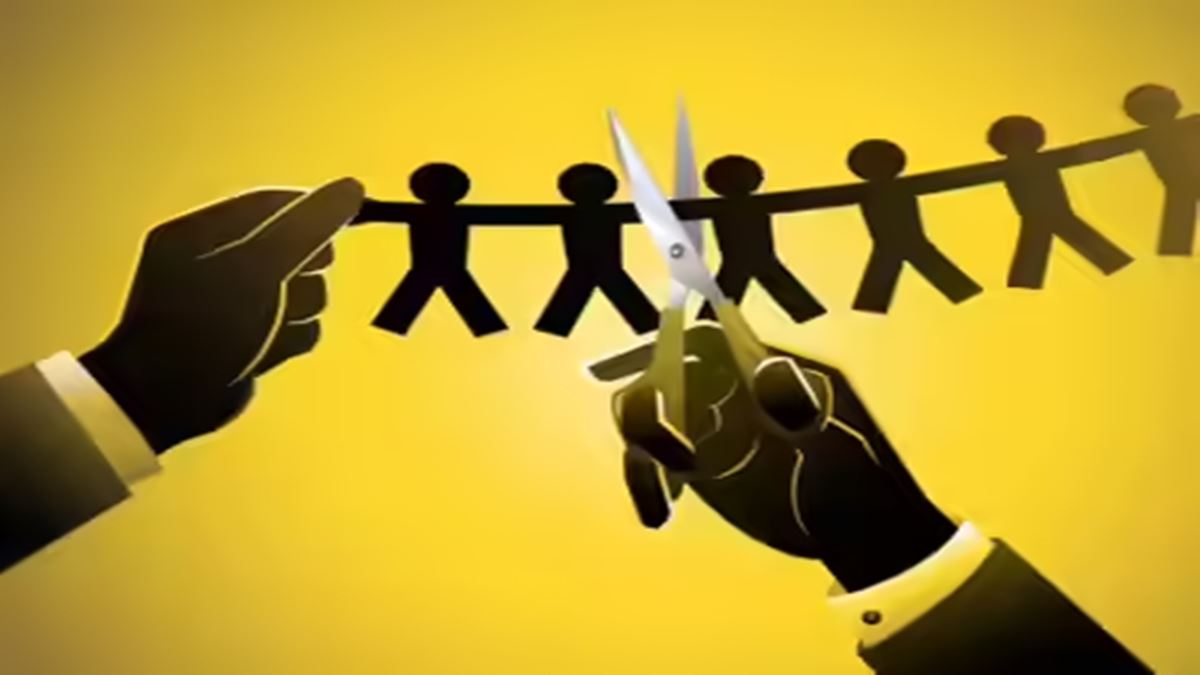


There’s a particular kind of anxiety that hangs in the air right now, centered on our careers, and it’s harder to ignore. It shows up in half-finished LinkedIn posts, in late-night doomscrolling about layoffs, in the question people don’t quite say out loud: Am I already falling behind?
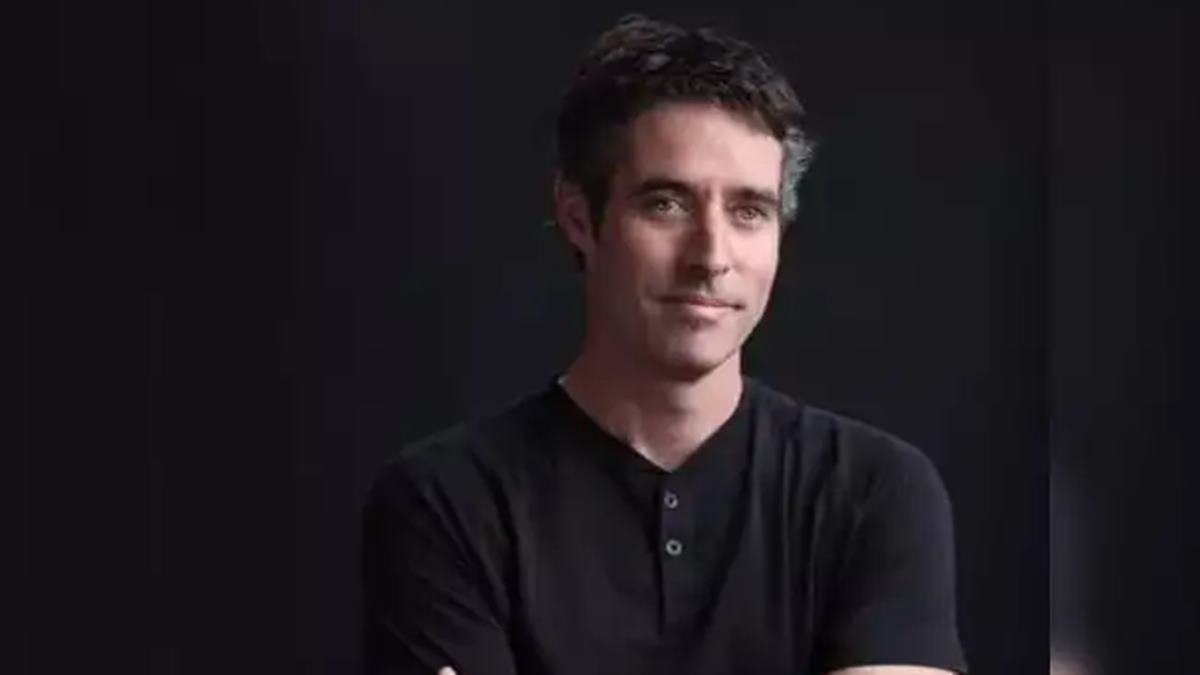
AI didn’t invent that feeling. But it’s definitely accelerating it. And if you ask Aneesh Raman, the Chief Economic Opportunity Officer at LinkedIn, who spends his days thinking about how entire economies adapt to moments like this, the real problem isn’t just the pace of change. It’s that most of us are still using an outdated mental model to navigate it.
“The biggest illusion,” he says, “is that careers are still predictable ladders you climb step by step.” Raman’s new book Open to Work: How to Get Ahead in the Age of AI, co-authored with LinkedIn’s CEO Ryan Roslansky and published by HarperCollins Publishers, Raman replaces that outdated script with a more relevant one: how to navigate constant change, with the help of an essential guide to building confidence and achieving success, especially in the age of AI.
The illusion that Raman speaks of had a good run. Study hard, get the job, stay the course, move up. It made sense in a world where industries moved slowly and job descriptions stayed recognisable for decades. But that version of work is fading fast, and clinging to it now is less comforting than it is dangerous. Because the truth is, the ladder is gone. And in its place is something messier, more dynamic, and, depending on how you play it, more interesting.
It’s not a straightforward career growth anymore
Raman points out that people entering the workforce now are expected to hold twice as many jobs as the generation before them. Jobs that didn’t exist a few years ago are now legitimate career paths. “Our 2026 Grad’s Guide data shows that AI Specialist and Generative AI Engineer are among the fastest growing roles, but so are Digital Content Creator, Brand Representative, Media Production Crew, Bid Manager, and Category Manager,” says Raman. The idea of a five- or ten-year plan is starting to feel like career cosplay.
Before you get overwhelmed by this, Raman suggests doing something simpler: focus on a today plan. Not where you’ll be in a decade, but whether you’re learning anything useful right now. “Instead of chasing the perfect title, focus on environments where you can learn, adapt, and grow, continuously,” Raman advises.
Is AI coming for your job?
AI isn’t coming for titles, it’s coming for tasks.” he says. “This comes down to one key shift: stop thinking about your job as a title and start thinking about your job as a set of tasks. I know that goes against so much of how we identify ourselves at work and how we are valued (and paid) at work, but that’s the best way to understand AI,” Raman adds. This distinction matters because “job” is a monolith, “tasks” are manageable. Break your work into pieces, and suddenly the future looks less like a cliff edge and more like a series of small negotiations. What can be automated? What can be augmented? What still requires you, your judgment, your taste, your ability to read a room?
Raman suggests a simple exercise: list out what you actually do in a week, then sort it into three buckets: 1. What AI can already handle, 2. What AI can help you do better, 3. What remains distinctly, stubbornly human.
“As you shift tasks across those buckets,” he says, “you’ll start changing your job on your terms.” That’s the power move here as you preemptively redesign your own role.
It’s also about shifting how we usually talk about technology. “We like inevitability. It absolves us of responsibility. But AI, for all its power, is still a tool, and tools tend to amplify intent. Used well, it’s wildly democratizing. A shopkeeper in Pune can spin up marketing campaigns that rival national brands. A driver in Lucknow can map out a side business, learn new skills, access systems that were never designed with her in mind,” Raman explains.
But there’s a flip side, and it’s not subtle. “If people don’t build the skills to use these tools,” Raman says, “or if they hold back out of fear, inequality will grow. The biggest divide won’t be between those who have degrees and those who don’t. It’ll be between those who choose to engage with this moment and those who don’t.” It’s less about access than attitude. Less about credentials than participation.
The revenge of “soft skills”
For years, workplaces treated human-centric skills like communication, empathy and creativity, as nice-to-haves. The real currency was technical ability, efficiency, and scale. AI is flipping that hierarchy. Machines are getting very good at the things we once optimized for. Faster analysis. Cleaner outputs. Infinite drafts. And instead of competing, the smarter move is to lean into what machines can’t replicate, not fully, not convincingly.
Raman calls them the 5Cs: curiosity, compassion, creativity, courage, communication.
They sound like something out of a leadership offsite. But the framing is different now. These aren’t abstract ideals, they’re emerging as economic advantages. “These define what makes us uniquely human. AI can help us with those but not beat us at them and together they fuel the human ability to imagine, invent, create and build that will be core to work in the coming years,” he says.
Most Popular
- EntertainmentWill there be a Bhooth Bangla 2?By Karishma Shetty
- GQ Binge WatchNew OTT releases (April 20-April 26): 10 new movies and shows arriving on ZEE5, Netflix, Prime Video & moreBy Gaurav Sonavane
- GQ Binge WatchWhat to watch: 7 binge-worthy Japanese dramas available on Netflix, Amazon Prime Video & Viki Rakuten in IndiaBy Maansi V
- https://6dd29067578b202b45fbf0da5780aaac.safeframe.googlesyndication.com/safeframe/1-0-45/html/container.html
Unlike technical skills, which can become obsolete overnight, these compound over time. You don’t learn curiosity once. You practice it. Same with judgment, with storytelling, with the ability to navigate ambiguity without freezing. “The key is that they’re skills, and you can build them. Raise your hand to present. Mentor someone. Put yourself in situations where you have to read the room and adapt. These skills are built through practice, and the more you use them, the stronger they get,” he adds.
Reimagine your resume
If there’s one place where the old rules are breaking down fastest, it’s the resume. “The new resume isn’t a list of credentials and company logos,” Raman says. “It’s your work product.” Translation: show, don’t tell. What have you built? What have you tried? Where have you applied these tools in ways that actually changed something? This is where the internet, especially platforms like LinkedIn, becomes less about networking and more about proof of work. Post what you’re learning. Share experiments. Document the process, not just the outcomes.
Your job is not your safety net
Here’s the part most people don’t want to hear: “In the age of AI,” Raman says, “there are no safe jobs, only safe skills.” According to data and research by LinkedIn, 70 per cent of the skills required for the average job will change by 2030. That number sounds dramatic. “I know it can sound like change is just happening to you. But here’s what I’d push back on: you get to decide where your job goes next,” says Raman, insisting that you don’t need to reinvent yourself overnight, or a grand pivot. All you need is movement. “Every day, there are small moves you can make,” he says. “Hand a routine task off to AI. Use the time that frees up to take on something that requires more judgment, more creativity.” Do that consistently, and the cumulative effect is real. Your role evolves. Your value shifts. Not in one dramatic leap, but in a series of deliberate steps.
There’s a caveat, though, and it’s an important one. Adaptation isn’t purely an individual burden. If your workplace isn’t evolving, if it’s not giving you access to tools, or space to grow, that’s not a personal failure. It’s a structural one. “You can only adapt so far in an environment that isn’t adapting with you,” Raman says. In that case, sometimes the smartest move isn’t to push harder where you are. It’s to move.
For all the talk of disruption and transformation, the most actionable advice Raman offers is almost disarmingly simple. “Start small. Start today. But start.”
Not when things settle down. Not when you feel ready. Not when the path is clear. Because if there’s one thing this moment doesn’t offer, it’s clarity. What it does offer is momentum, for those willing to engage with it. And right now, that might be the only real advantage that matters.
Source – https://www.gqindia.com/content/heres-why-linkedins-ceoo-believes-safe-jobs-are-a-thing-of-the-past