


















For years, automation quietly chipped away at routine office work — processing invoices, routing requests, answering customer queries. The next phase of artificial intelligence looks far less polite.
It doesn’t just assist. It acts.
Across industries, companies are experimenting with so-called agentic AI — systems that can reason, plan and execute multi-step tasks with limited human input. The shift is subtle but consequential: from tools that follow instructions to digital agents that can carry them out.
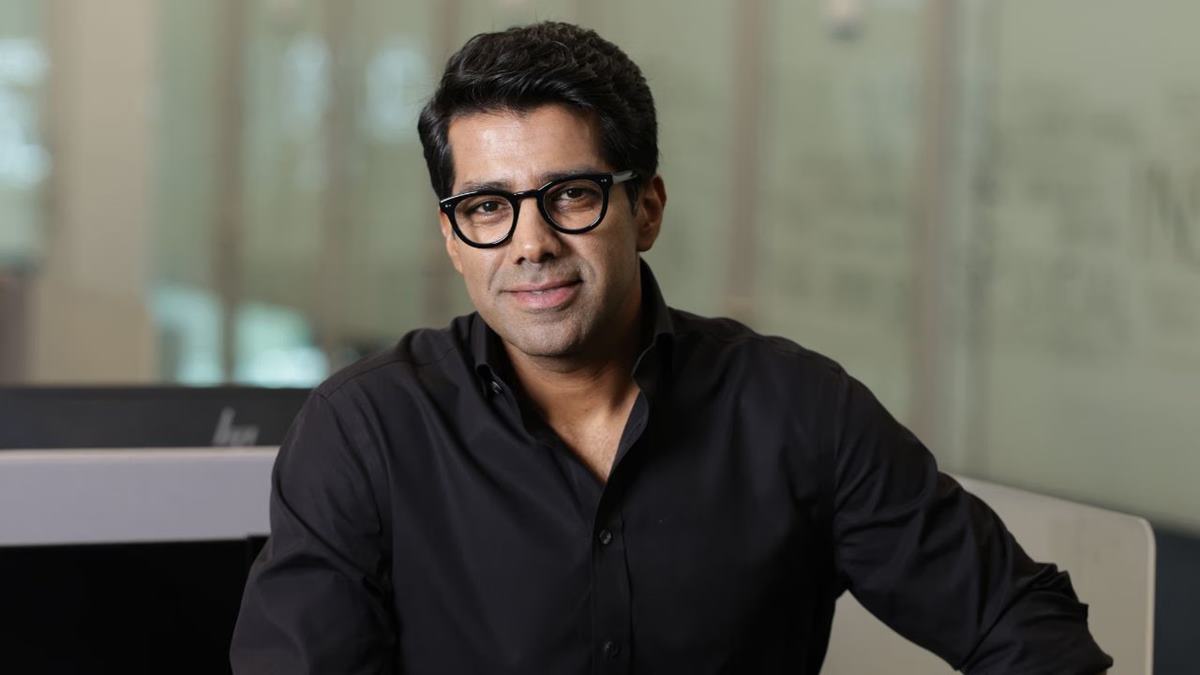
Sugi Venkatesh, SVP of Employee Success at Salesforce for South Asia, believes this moment marks a structural break from earlier automation cycles.
“What we’re seeing in 2026 is fundamentally different from earlier automation waves – and the distinction lies in scope and agency,” he says. “Previous waves automated discrete, rule-based tasks. Agentic AI can reason, make decisions, and take action across complex, multi-step workflows – autonomously.”
In other words, the technology is no longer just about efficiency. It’s about changing how organisations structure work itself.
From pilot projects to real operations
For much of the past two years, AI inside enterprises has existed largely in demo mode: chatbots answering internal queries, copilots drafting emails, recommendation engines nudging decisions.
But Venkatesh says the centre of gravity is shifting.
“The shift we’re witnessing is from experimentation to production, from pilots to enterprise-scale deployment,” he says.
At Salesforce, he notes, the company’s agent ecosystem is already seeing significant activity.
“Agentforce has powered over 1.2 billion LLM calls across our customer base, and we’re seeing record production deployments across industries as varied as financial services, life sciences, and the public sector.”
What changes when AI moves from test environments into daily operations is not just scale — it’s organisational design.
“Companies are no longer just adopting tools – they’re redesigning how work gets done,” he says.
New roles are emerging quickly. Titles that barely existed a year ago — AI conversation designers, deployment strategists, AI architects — are becoming part of enterprise org charts.
“Entire workflows are being rebuilt around humans and agents working in tandem,” Venkatesh says.
He pauses before adding what may be the more consequential point: “This is not just a technology transformation but a talent transformation.”
The age of managing AI agents
The next shift is managerial.
If AI agents can perform tasks, someone has to supervise them.
“This is perhaps one of the most significant leadership questions of our era,” Venkatesh says. “We often say that this is the last generation of leaders to manage only humans.”
In the coming years, many employees will find themselves overseeing teams that include digital workers.
“Going forward, every employee, regardless of their function, will work alongside agents. And many will manage teams of agents.”
That changes the job description.
“Roles are becoming less about task execution and more about judgment, orchestration, and oversight,” he says.
The idea of accountability, interestingly, does not weaken when machines do more work.
“Accountability doesn’t disappear with AI – it actually becomes more explicit.”
Managers must constantly ask three questions: what the agent is doing, how well it is performing, and where human intervention still matters.
Why most AI pilots fail to scale
For every company deploying AI at scale, many others remain stuck in experimentation.
The difference, Venkatesh argues, is architectural.
“Experimentation typically means deploying AI in isolated pockets – a chatbot here, a recommendation engine there – without connecting it to the data, business logic, and workflows that drive real outcomes.”
What matters is something he calls “closing the last mile.”
“LLMs are one of the most powerful technological advancements in history, but the challenge comes in extending those capabilities into the business environment.”
Raw intelligence is not enough. Enterprise systems require context, control and orchestration.
“This last mile – converting raw intelligence into enterprise-grade AI – is where true business value resides.”
And doing that, he says, inevitably becomes a workforce challenge as much as a technology project.
“Companies should see AI not just as a technology investment, but as a people transformation.”
The trust problem
Autonomous systems inevitably raise uncomfortable questions about governance.
If AI agents can update records, interact with customers and route decisions — who is ultimately responsible?
For Venkatesh, the answer begins with transparency.
“Trust is the foundation.”
Organisations deploying agentic systems must always be able to answer three questions: what the agent is doing, whether it is doing it correctly, and how quickly humans can intervene when something goes wrong.
“Trust is not a constraint on innovation,” he says. “Trust is propulsion.”
Without it, large-scale AI adoption will stall.
The new skills that matter
Perhaps the most persistent misconception about AI is that the future workforce will be defined purely by technical skills.
Venkatesh disagrees.
“The capabilities required for the agentic era span three dimensions: Human, Agent, and Business skills.”
And surprisingly, the human dimension remains central.
“What’s striking is that human skills – adaptability, accountability, collaboration, emotional intelligence – matter just as much as technical ones.”
At the same time, AI literacy is quickly becoming a baseline expectation.
“Every employee needs to understand what agents can and cannot do, how to direct them effectively, and when to intervene.”
Managers face an even steeper learning curve.
“They must not only develop their own AI fluency, but also create the conditions for their teams to grow into this new way of working.”
Leading a team where some members are algorithms and others are people will require a different style of leadership altogether.
Will AI change workplace culture?
Technology often promises cultural transformation and delivers marginal efficiency gains.
Agentic AI could go either way.
“If organisations simply layer AI onto existing workflows without rethinking how work gets done, they’ll digitise old habits,” Venkatesh says.
But if companies embed AI where collaboration already happens — inside communication platforms and daily workflows — something more fundamental may change.
“When you embed agentic AI directly into that conversational layer, you’re not asking employees to adopt a new tool,” he says.
“You’re meeting them where they already are.”
Still, he cautions that technology alone never changes culture.
“Culture, in our view, is a competitive advantage – and it has to be cultivated intentionally.”
Why India could benefit
The long-term implications extend beyond individual companies.
Countries with large digital workforces may be better positioned to adapt.
India, Venkatesh argues, is one of them.
“With the largest developer and tech workforce in the world, the potential for reskilling at scale and building new AI-era roles is enormous.”
According to IDC estimates cited by Salesforce, the company’s ecosystem alone could create 1.8 million jobs in India by 2028.
That suggests a paradox at the heart of the AI conversation: while automation eliminates certain tasks, it may simultaneously create entirely new roles.
For companies navigating the transition, the real question is not whether AI agents will reshape work.
It is how quickly organisations are willing to redesign themselves around them.
“The future of work belongs to those who transform fast,” Venkatesh says.