













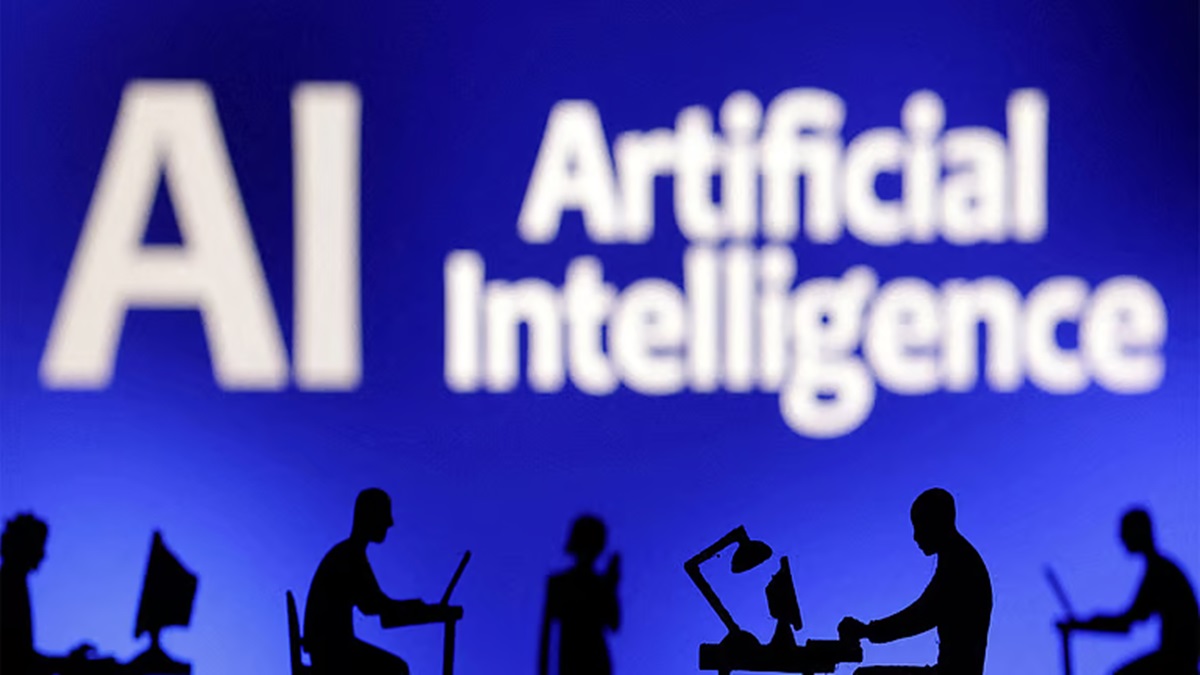






As executives warn of the risk that AI will automate workers out of jobs, some CEOs and policymakers are promoting universal basic income (UBI) as a federal policy to manage that risk.
Earlier this year, Tesla (TSLA) and SpaceX CEO Elon Musk took to X to announce his support for UBI, writing, “Universal HIGH INCOME via checks issued by the Federal government is the best way to deal with unemployment caused by AI.”
UBI—which gained national prominence when then-presidential candidate Andrew Yang promoted it in 2020—is a recurring, unconditional government payment to all people.
Unlike other public benefits, like Medicaid and SNAP, which often have work and income requirements, UBI doesn’t, so people can qualify regardless of employment status.
Now, some high-profile figures, like Musk, are championing UBI because they are predicting that AI could lead to widespread unemployment.2 While experts disagree on the extent to which AI will change the labor market, many fear it could decimate jobs across many occupations, especially for white-collar workers.
In a worst-case scenario where AI replaces most workers, a federal UBI program would provide all workers with a baseline income, proponents claim.
Interest in UBI and guaranteed income has existed for years as ways to alleviate poverty, reduce racial inequality, improve health outcomes, and more.4
UBI differs from guaranteed income because it targets specific groups, such as low-income households, rather than everyone. However, guaranteed-income pilot programs could still offer clues about how unconditional cash payments would impact workers affected by AI-driven job loss.
More than 30 pilot programs have launched since the pandemic, according to the Stanford Basic Income Lab and Center for Guaranteed Income Research. Programs have popped up across the country, from Newark, New Jersey, to Tacoma, Washington.56 Payments in these programs range from $200 to $1,000 a month.
Some results have been positive. Findings from a 2019 pilot program in Stockton, California, suggest that guaranteed monthly payments improve physical and mental health and reduce month-to-month income swings.7
Sam Altman, CEO of OpenAI, had been a vocal proponent of UBI, even funding a pilot program in 2019. But he recently said he’s less supportive than in the past.8 Instead, he now promotes a “public wealth fund” in which everyone gets a stake in a fund invested in AI companies or firms that use AI.
“I’m much more interested in ways which we think about collective ownership, that could be in compute or equities or something else,” Altman said in late April on “The Most Interesting Thing in AI” podcast.9 “I think a fixed cash payment—although useful and maybe a good idea in some ways—does not get at what we’re really going to need for this next phase.”
Some Democratic policymakers have also expressed interest in UBI programs to mitigate the effects of AI.
Last year, Bonnie Watson Coleman (D-N.J.) reintroduced the Guaranteed Income Pilot Program Act, which would create a nationwide pilot program to study the effects of monthly cash payments made over three years. The proposed pilot program would provide monthly cash payments equal to fair market rent for a two-bedroom home in the recipient’s ZIP code.10
However, other progressive legislators say they’re wary of tech executives who claim to support UBI, suspecting these billionaires wouldn’t actually fund these policies should the time come.11
Others question the premise entirely, doubting that AI will automate most jobs or that UBI is the answer if it does.
Jay Richards, vice president of social and domestic policy at the Heritage Foundation, a right-leaning think tank, notes that during previous technological shifts, new jobs were created, even as those linked to soon-outdated technologies went away.
“The new AI prophets of doom…simply cannot envision what work the future will bring, so they conclude it will bring none,” Richards wrote. “In the real world, Washington would stack a UBI atop existing programs, adding trillions to a budget already careening toward insolvency.”
Some Democratic policymakers have also expressed interest in UBI programs to mitigate the effects of AI.
Last year, Bonnie Watson Coleman (D-N.J.) reintroduced the Guaranteed Income Pilot Program Act, which would create a nationwide pilot program to study the effects of monthly cash payments made over three years. The proposed pilot program would provide monthly cash payments equal to fair market rent for a two-bedroom home in the recipient’s ZIP code.10
However, other progressive legislators say they’re wary of tech executives who claim to support UBI, suspecting these billionaires wouldn’t actually fund these policies should the time come.11
Others question the premise entirely, doubting that AI will automate most jobs or that UBI is the answer if it does.
Jay Richards, vice president of social and domestic policy at the Heritage Foundation, a right-leaning think tank, notes that during previous technological shifts, new jobs were created, even as those linked to soon-outdated technologies went away.
“The new AI prophets of doom…simply cannot envision what work the future will bring, so they conclude it will bring none,” Richards wrote. “In the real world, Washington would stack a UBI atop existing programs, adding trillions to a budget already careening toward insolvency.”
Source – https://www.investopedia.com/ai-is-coming-for-jobs-is-universal-basic-income-the-answer-11972573