


















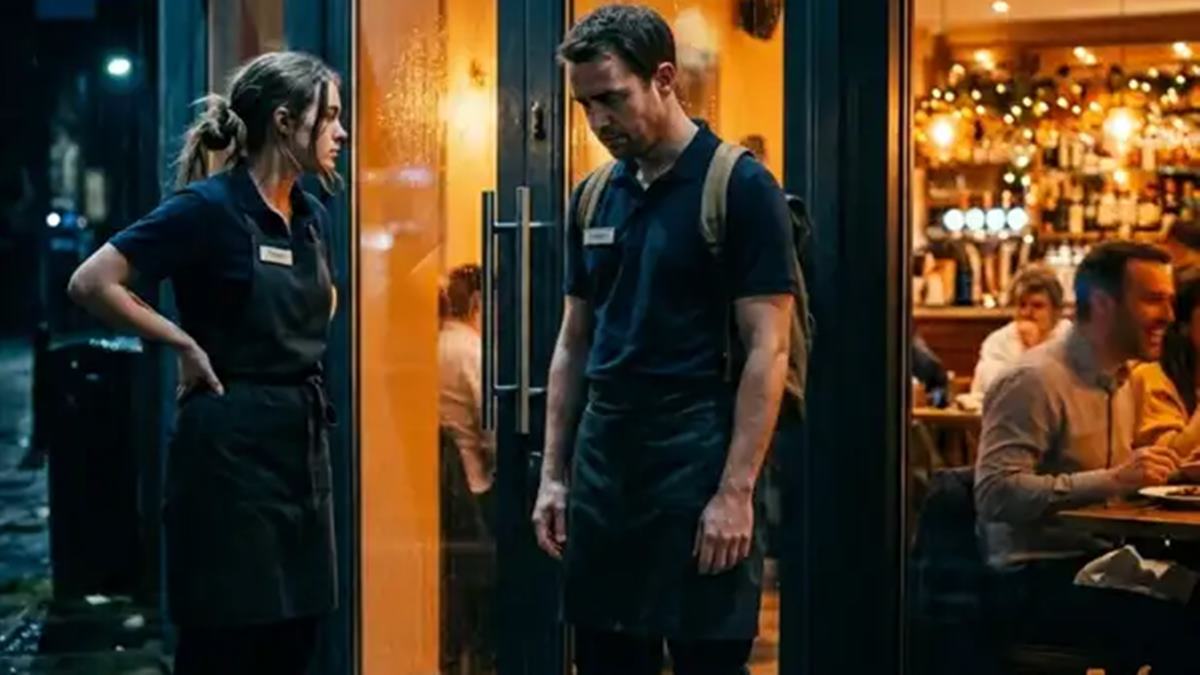
They were there for every shift. They knew the regulars by names, the kitchen’s layout, and each other’s workflows so well that their managers scheduled them side by side every single day. A husband and wife worked together for over a decade at the same restaurant. And then one day they were just gone.
Why? For years, she had been doing her husband’s cash-out reports. Managers knew it and kept quiet. No money missing. No fraud. Just a quiet, working arrangement for two people working as one. Then they suddenly started enforcing the rules, and they both lost their jobs.
They posted their story to Reddit, where it went viral. Not because the story was strange but because it was painfully familiar.
“Get over it and move on”
The restaurant lost more than just two workers. It lost the glue that held it all together.
Two weeks after the firings, back-of-house and front-of-house staff remained visibly shaken. The general manager had a pre-shift meeting to try to address the tension but no one spoke. A cold and calculated silence. The original post states the manager lost her cool and yelled at the team to get over it.
Not only did their colleagues like the couple, they adored them. The next day, the restaurant posted a job opening, and the first response was: “Bring them back and I’ll be there.”
Loyalty can’t be bought. It’s built over the years by being there.
Data supports what workers are experiencing
This is not just a bad week for one restaurant. It’s a sign of something breaking down in American workplaces.
Gallup research on U.S. employee engagement found that in 2025, Gen Z and younger millennial employees were 13 points less likely than in 2020 to strongly agree that someone at work cares about them as a person. That number dropped 11 points over that same time frame.
That is more than disappointing. That’s the slow unraveling of the worker-employer relationship and moments like this couple’s firing are exactly why.
Careerminds research finds that more than half (58 percent) of long-tenure employees have become less loyal to employers after being laid off or let go. A quarter said they were far less loyal. Years of devotion down the drain. Not that the workers wanted to leave, they were pushed out the door and given nothing in return.
Rules that they apply only when it suits them
The reaction online to this story was not only sympathetic. It was recognition.
“They proved the rules can be changed and enforced whenever management sees fit.” That is what the remaining staff said. And that fear is well-founded. One of the fastest ways to lose trust is by selectively enforcing workplace policy. When people feel that rules are being used against them, rather than being applied as fair standards, they stop investing. They come in, do the minimum, and wait.
And that’s what happened. The jokes stopped. The warmth was gone. The team returned to cold, transactional exchanges: “Hello, how are you?” “Great, me too.” It was a place that once had real culture, and then it became a place where people clocked in and out.
What this costs companies and why they don’t see it coming
Businesses tend to treat long-tenured employees as interchangeable. They don’t know what they’re walking out the door with. The institutional knowledge, the informal systems, the relationships that bind a team together.
In the restaurant business, morale is king. It sets the tempo for tables turned, for conflicts dealt with on the spot, for a rough night made manageable. You can’t just replace that with a job posting.
And the team that is left behind? It’s not just sadness. That fear translates to disengagement and disengagement is expensive.
It doesn’t have to be this way
The grim lesson for millennials and young workers watching this unfold is that loyalty doesn’t save you. The average American worker now stays at a job just 4.1 years, not because they are lazy, but because they have experience.
They deserved better, those who still put in a decade, who built something real and believed in the place they worked. The same goes for the team left behind, walking into a restaurant every day that feels like it doesn’t belong to them anymore.