
















For decades, hiring has followed a familiar and largely unquestioned structure. Recruiters manually screened resumes, shortlisted candidates based on subjective judgment, and conducted interviews to determine talent fit. The process has largely been time consuming, expensive, and inconsistent, relying heavily on intuition rather than measurable evidence. One of the biggest challenges in traditional hiring has always been human behavior itself. The same interviewer can evaluate candidates differently depending on mood, time of day, fatigue, or personal bias. Two equally qualified candidates may walk away with completely different outcomes simply because of who interviewed them and when.
In an era defined by speed, global competition, and data driven decision making, this traditional model no longer aligns with the realities of modern business. Companies today operate in environments where talent availability, hiring speed, and workforce quality directly influence competitive advantage and broader business outcomes. A system designed for a slower and less complex world is struggling to keep up.
Artificial intelligence is now driving a fundamental shift in how organizations approach hiring. What was once a human led administrative process is evolving into an automated, predictive system built on algorithms, machine learning, and structured data. Organizations are increasingly adopting AI to process large volumes of applications, identify patterns in candidate data, and generate insights that would be impossible through manual effort. Nearly 45 percent of organizations already use AI in HR functions, and another 38 percent plan to adopt it soon, reflecting how rapidly AI is becoming core hiring infrastructure. Companies using AI powered recruitment tools report faster hiring cycles and improved quality of hires, with some studies showing time to hire reduced by as much as 40 percent.
Interestingly, hiring has already been partially automated for years. Today, most large organizations rely on AI driven systems to read and filter resumes before a human ever sees them. Many critics of AI interviews overlook the fact that algorithms have long shaped hiring decisions through resume shortlisting. The next step is simply extending that automation into the screening process itself.
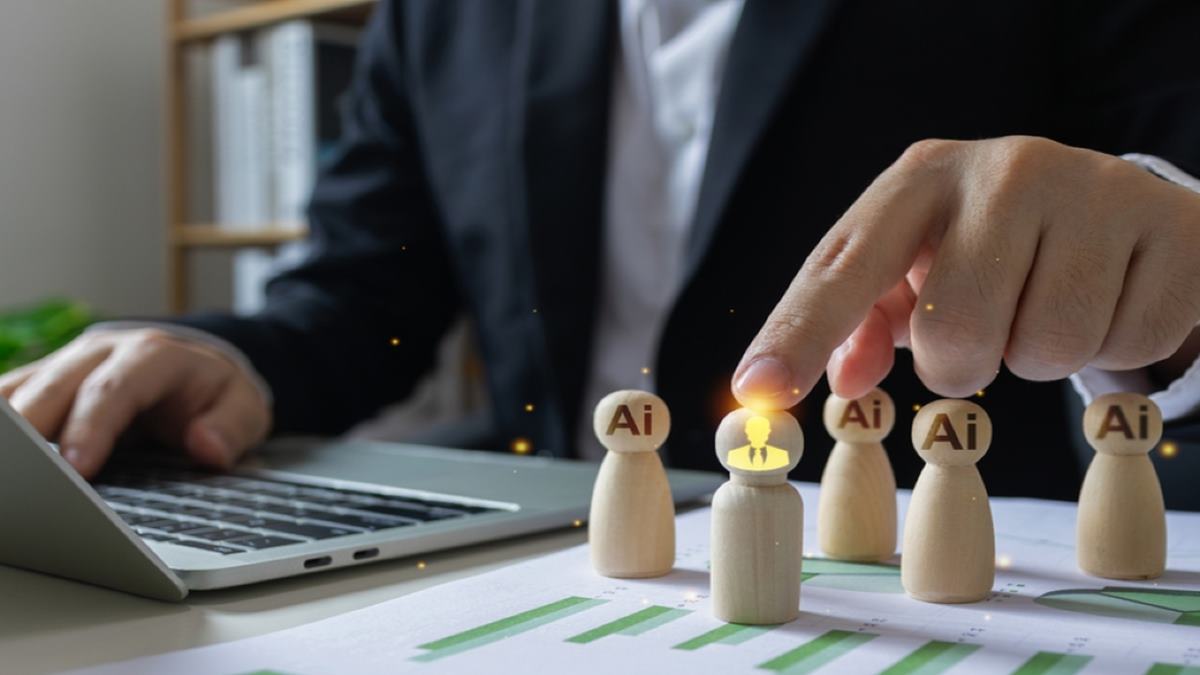
The most transformative development is emerging at the earliest stage of hiring, where AI interview agents are becoming the new front door of recruitment. Unlike traditional screening methods that rely on resume filtering or limited recruiter interaction, these systems engage candidates directly through structured conversations. They ask role specific questions, evaluate responses, and generate standardized assessments. Every candidate is evaluated through the same framework, reducing variability caused by human fatigue or bias and enabling organizations to assess communication ability, problem solving skills, and job readiness at scale.
This shift fundamentally changes the hiring workflow. Instead of recruiters spending hours conducting repetitive screening calls, AI systems handle the initial evaluation process. Candidates interact with virtual interviewers that assess responses in real time and generate structured performance data. Early stage interviews become faster, more consistent, and continuously available, reducing hiring cycles while expanding access to opportunities for applicants.
It also signals a deeper shift from reactive hiring to predictive decision making. Rather than simply verifying past credentials, AI systems analyze behavioral patterns and skill alignment to estimate future performance. Recruitment begins to function as a strategic capability driven by data, allowing organizations to assess potential, evaluate team compatibility, and match talent with evolving business needs.
Over the next two years, early stage screening is likely to become largely automated, with AI agents sourcing candidates, conducting initial interviews, and ranking applicants before human involvement. Recruiters will move toward more strategic roles focused on final validation, relationship building, and workforce planning.
What we are witnessing is not just a technological upgrade but a structural redesign of how organizations identify and evaluate talent. AI is not simply assisting hiring. It is redefining how hiring happens.