






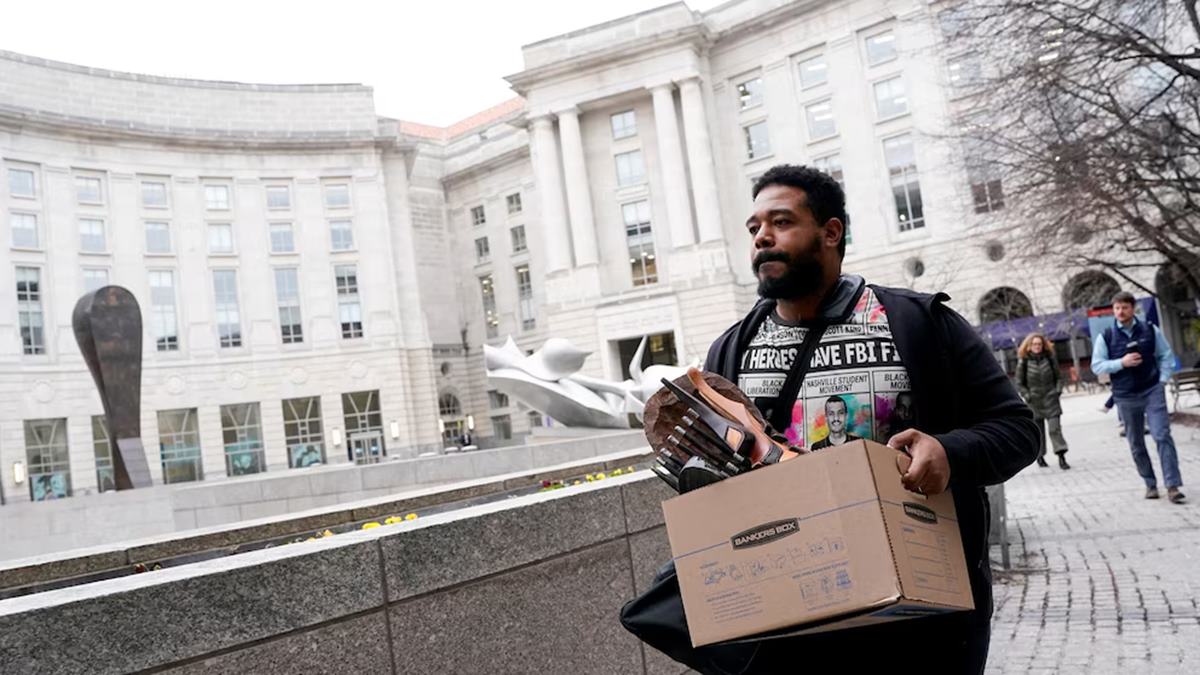














The U.S. job market entered 2025–26 under unprecedented strain as more than 1.17 million workers lost jobs, the highest annual cuts in half a decade. According to corporate announcements and independent labor trackers, layoffs are affecting technology, logistics, retail, telecom, banking, and manufacturing sectors as companies respond to AI transformation, cost pressures, inflation, and slowing demand.
What began as a post‑pandemic workforce correction has become a broader structural reset. Companies that hired aggressively in 2020–22 are now streamlining operations. Many executives cite artificial intelligence and automation as core drivers of job cuts and efficiency programs. In October 2025 alone, U.S. employers announced more than 150,000 layoffs, the largest monthly total for that period in over two decades.
Major firms including Amazon, Intel, Microsoft, UPS, FedEx, Verizon, and Citigroup have publicly disclosed deep workforce reductions.
This downsizing is particularly painful for the U.S. manufacturing sector.
Intel alone has confirmed cuts affecting up to 15% of its workforce, while UPS is navigating a historic reduction of 48,000 roles to offset declining shipping volumes and rising automation. Amazon’s strategy involves removing entire layers of middle management to restore a “Day 1” startup culture, impacting nearly 30,000 employees.
Meanwhile, Microsoft continues to trim its gaming and cloud divisions to fund its multibillion-dollar partnership with OpenAI. These layoffs are concentrated heavily in the United States, particularly within the tech hubs of Seattle and Silicon Valley, but the ripples are global.
The concentrated nature of these layoffs is creating a localized economic cooling effect in major U.S. cities. Seattle, the headquarters for both Amazon and Microsoft, is seeing a significant rise in office vacancies and a slowdown in the luxury real estate market as thousands of high-earning tech workers lose their salaries. In California, the impact is spread across San Francisco and Santa Clara, where Intel’s downsizing adds to a growing list of tech departures.
Big tech and corporate America cut deep: Who is most impacted
Leading U.S. corporations have announced significant layoffs in 2025 and early 2026, collectively affecting hundreds of thousands of employees. Many cuts have targeted corporate, technical, and administrative roles that companies believe can be streamlined through automation and AI tools.
Amazon reported one of its largest workforce reductions in company history, cutting 14,000 corporate roles in late 2025 as part of a strategy to flatten management layers and implement AI‑driven efficiencies. Some industry reports suggest the total impact could extend to up to 30,000 job cuts when broader corporate functions are included.
Intel, a cornerstone of U.S. semiconductor manufacturing, is undertaking a sweeping restructure under new leadership, planning to eliminate approximately 24,000 positions. These cuts are part of a multi‑year effort to sharpen competitiveness against rivals and reallocate resources toward advanced chip and AI‑centric initiatives.
Microsoft has reduced its workforce by an estimated 15,000 or more, focusing on reallocating resources into AI infrastructure and cloud services. These layoffs span global operations and are part of broader organizational flattening to drive faster decision‑making.
Other technology giants also reported cuts: Meta Platforms cut between 3,600 and 5,000 employees, reflecting a shift away from earlier metaverse investments toward AI and core social apps; Google (Alphabet) eliminated more than 1,000 roles across consumer product teams; and Salesforce, IBM, and Oracle each reduced staff as part of profitability and automation strategies.
Telecom and logistics sectors were hit hard as well. Verizon announced about 15,000 job cuts to streamline operations. Meanwhile, shipping giants such as UPS and FedEx collectively laid off tens of thousands, citing lower shipping volumes and network optimization efforts.
Outside tech and logistics, companies like Citigroup and Ford have cut tens of thousands of roles as part of restructuring programs in banking and automotive manufacturing, including electric vehicle transitions. Retail and consumer brands such as Starbucks, Walmart, and Coca‑Cola also trimmed staff to sharpen store footprints and reduce overhead.
Why layoffs are surging: AI, economics and structural shifts
Several overlapping forces are reshaping the U.S. labor landscape:
1. AI and Automation:
Companies are widely investing in artificial intelligence to automate routine tasks and accelerate innovation. This has made certain jobs redundant — particularly in corporate services, customer support, and middle management. AI‑related cutbacks accounted for thousands of layoffs in 2025 alone, underscoring how technology adoption now directly influences employment decisions.
2. Post‑Pandemic Workforce Correction:
The hiring boom of 2020–22 left many firms with oversized teams. As growth normalized, companies are adjusting headcount to align with long‑term demand rather than pandemic‑era expansion.
3. Cost Discipline and Profit Pressure:
Persistent inflation and rising interest rates have amplified investor scrutiny over margins. Corporations are cutting overhead and simplifying structures to sustain profitability during slower economic growth.
4. Global and Geopolitical Factors:
External pressures — including trade tensions, shifting supply chains, and U.S. policy changes — have also influenced corporate planning. Recent global uncertainties, such as ongoing tensions in the Middle East involving Iran and Israel, weigh on market confidence and can indirectly affect investment and hiring decisions across sectors. (Note: geopolitical context inferred from global trading patterns and macroeconomic commentary.)
What layoffs mean for workers and the economy
For workers, the current cycle underscores the growing value of AI‑resilient, high‑skill careers in fields like machine learning, cybersecurity, data analytics, and cloud engineering. Job seekers with expertise in these areas may see stronger demand even as routine roles decline.
However, the broader labor market presents challenges. With hiring slower and layoffs rising, many displaced workers face lengthier job searches and increased economic uncertainty. Consumer spending, a key driver of U.S. growth, could weaken as households tighten budgets.
Investors are interpreting many layoffs not as signs of terminal distress, but rather as strategic repositioning. Cost rationalization, coupled with targeted tech investment, may boost long‑term competitiveness for those firms that adapt successfully.