















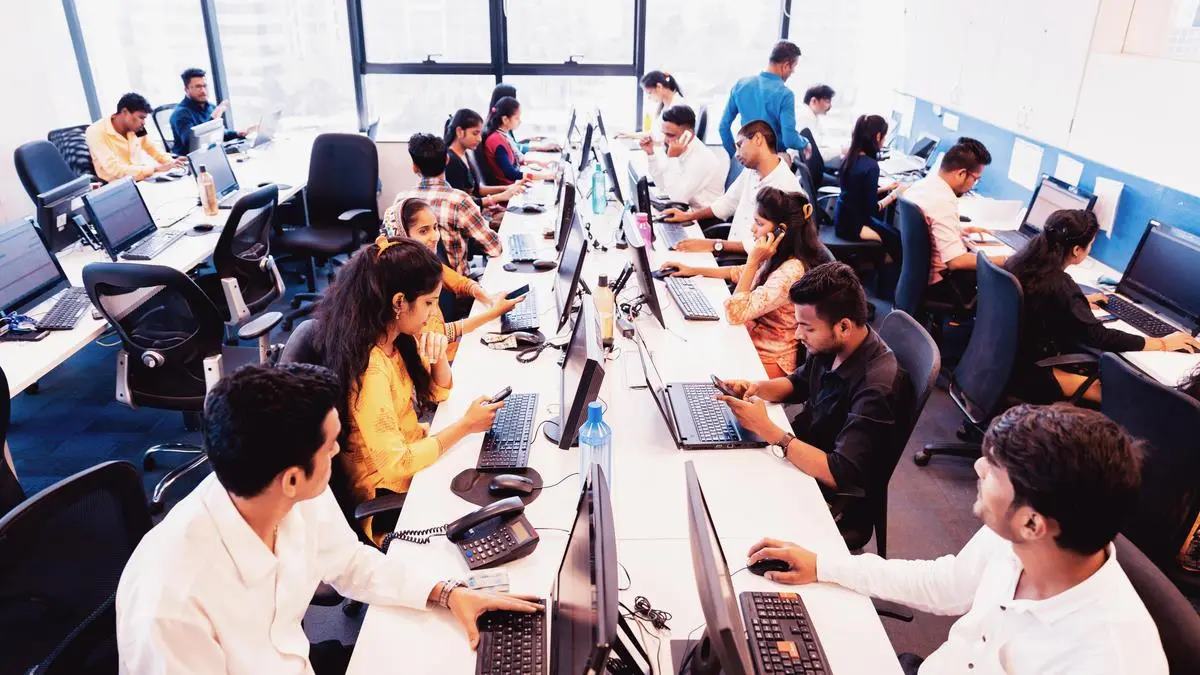
Start-up hiring in 2026 has picked up from last year, but without the excesses of earlier boom cycles, as founders adopt a more cautious, execution-focused approach amid selective funding and persistent talent shortages. Rather than broad-based hiring, start-ups are adding headcount only where it directly supports product delivery, revenue growth or operational risk reduction, especially in AI and deep-tech roles.
“Hiring sentiment is clearly stronger than last year, but it’s not a return to mass hiring. What we’re seeing is disciplined confidence, with teams expanding in line with product progress and revenue traction,” said Sachin Alug, CEO of NLB Services.
This shift reflects a broader reset across the start-up ecosystem, where companies have moved from survival-mode to execution-led hiring, backed by clearer revenue visibility and AI-linked product roadmaps. “Headcount growth is now selective and tightly aligned to business outcomes rather than broad expansion,” said Neeti Sharma, CEO of TeamLease Digital.
AI roles drive hiring momentum
Hiring demand in 2026 is increasingly concentrated in roles that directly reduce execution and operational risk. Start-ups are prioritising AI and ML engineering—particularly GenAI application development—alongside data engineering, cloud and platform engineering, and cybersecurity. While overall technology hiring saw a brief dip early this year, demand for specialised AI-led roles has remained resilient.
“These roles directly influence product speed, reliability and unit economics,” said Alug, adding that the bigger challenge today is not access to capital but access to the right skills. Hiring momentum exists, he said, but is constrained by talent quality rather than intent.
Start-ups are also displaying a barbell hiring pattern. Companies are selectively bringing in experienced mid-senior and senior professionals for critical roles in platform engineering, data architecture, security and AI product ownership. At the same time, early-career hiring is making a measured comeback, aided by AI tools that help freshers ramp up faster and deliver higher output per employee.
However, mid-level professionals with three to seven years of experience account for the largest share of start-up recruitment. “Hiring is heavily skewed toward mid-level talent, which now forms the backbone of start-up teams,” said Sharma. Freshers make up roughly 35–40% of start-up hiring, with demand largely limited to specialised tracks such as data, AI operations and cloud support.
This focus on fewer but higher-impact hires is also reshaping compensation trends. Pay for AI, data and advanced cloud roles continues to outpace traditional technology and non-tech functions, reflecting acute talent scarcity. AI, data and advanced cloud professionals command a 1.4–1.8 times premium over conventional software engineering roles at comparable experience levels. For professionals with five to eight years of experience, AI salaries now range between Rs 35–55 lakh annually, according to TeamLease Digital.
At the same time, pay growth in traditional tech roles has moderated to mid-single digits, while non-tech functions have seen limited increases unless directly linked to revenue generation or regulatory requirements.
Despite rising compensation, talent availability remains a major constraint. India faces a shortage of more than 50 per cent in AI talent, with demand far outpacing supply. “If funding tightens, start-ups are likely to cut peripheral roles first, while continuing to invest in AI, data and platform talent that directly drives productivity, differentiation and unit economics,” Sharma said.
Overall, the hiring playbook for Indian start-ups in 2026 is shifting decisively toward capability density rather than headcount expansion. With funding still selective and talent scarce, founders are prioritising execution-critical hires who can own systems end-to-end—signalling a more mature, outcome-driven phase of start-up hiring.