


















As geopolitical tensions in West Asia drive global oil prices toward volatile peaks, India finds itself at a familiar economic crossroads. With over 80% of its crude oil requirements met through imports, the nation’s forex reserves are perpetually sensitive to shifts in the energy market. In response to the current crisis, Prime Minister Narendra Modi’s WFH appeals have emerged as a strategic advisory, urging a return to pandemic-era practices: remote work, virtual meetings, and a drastic reduction in non-essential travel.
While framed as a voluntary austerity measure to ensure fuel conservation in India, this call to action triggers a complex economic debate. From a purely fiscal perspective, reducing the movement of millions of vehicles in urban centers could curb the national oil import bill. However, when viewed through the lens of distributional economics, the “Work From Home” (WFH) model reveals itself as a class-dependent instrument that reshapes the flow of wealth and the stability of the informal workforce in India.
The Distributional Question: Who Absorbs the Burden?
Economists analyzing the Indian work from home policy debate often start with a fundamental question: who is actually capable of adjusting? The ability to work remotely is not a universal constant; it is a function of the nature of the labor.
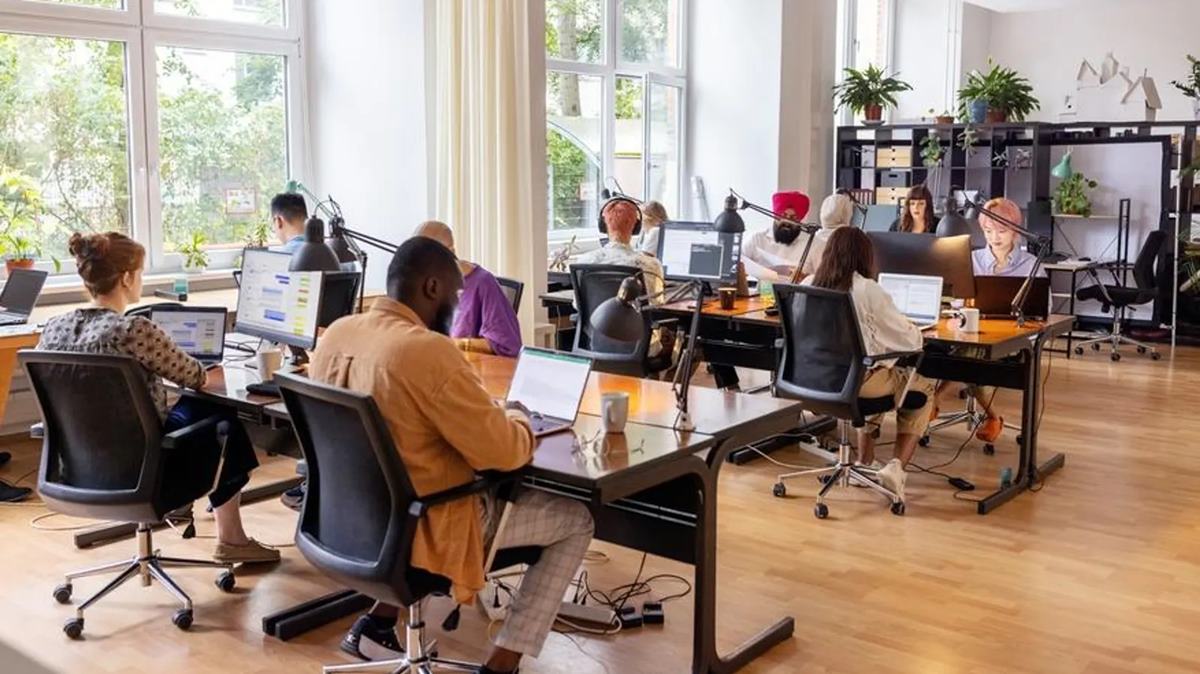
The Formal Sector Buffer: India’s formal salaried workforce – concentrated in IT, finance, consulting, and digital services – is uniquely positioned to comply with the PM’s appeal. For these “knowledge workers,” the transition to remote work is seamless, often involving nothing more than a laptop and a stable internet connection. For this demographic, WFH represents a net economic gain: lower commuting costs, reduced spending on professional attire, and greater time utility.
The Informal Sector Vulnerability: The situation is radically different for the Indian informal workforce, which constitutes roughly 90% of the country’s labor force. For canteen operators, cab and autorickshaw drivers, security guards, delivery staff, and retail workers in office districts, “footfall” is the lifeblood of their economy.
When a large tech park in Bengaluru or an office complex in Gurgaon shifts to a hybrid work or full-remote model, the secondary economy surrounding those buildings collapses. The street vendor selling tea, the private bus operator, and the local maintenance staff do not have the luxury of “digital presence.” In this context, WFH acts as a regressive economic force: it allows high-income professionals to retain (and even save) their salaries while simultaneously stripping away the daily earnings of urban service providers.
Lessons from the Pandemic: Strengths and Limits
The Covid-19 WFH lessons serve as a critical baseline for current policy. During the 2020-2021 lockdowns, the economy witnessed a bifurcated reality.
- Business Continuity vs. Isolation: In knowledge-heavy industries, WFH ensured survival. Productivity in software development and media remained high, and businesses saved significantly on overhead and real estate costs. However, long-term data also showed a weakening of spontaneous collaboration and a rise in “digital inequality,” where workers in smaller homes with poor connectivity struggled to maintain the same output as their affluent peers.
- Income Polarization: The pandemic proved that WFH is a privilege of the “propertied” class of labor. While white-collar professionals maintained their income streams, many in the informal sector lost their livelihoods entirely. If the current advisory transitions into a prolonged remote work mandate in India, there is a significant risk of institutionalizing this inequality.
Can Governments Effectively Mandate WFH?
From a legal and economic standpoint, the power of a government to mandate WFH is largely restricted to emergencies. During the pandemic, the UK, Europe, and India successfully implemented mandates because the “cost” of the mandate was weighed against the “cost” of human life.
In the current scenario, the remote work mandate in India remains advisory. Legal experts note that the Prime Minister’s remarks do not create a statutory right to work from home. Furthermore, global economic history suggests that permanent mandates are difficult to sustain. Most advanced economies have settled into a hybrid model because a purely remote state risks hollowing out the “service heart” of cities, the restaurants, transport networks, and hospitality sectors that rely on physical presence.
Will WFH Save the Indian Economy?
The central fiscal argument for WFH is the reduction of India’s oil imports. By lowering the demand for petrol and diesel in metro cities, the government hopes to stabilize the current account deficit. While the logic holds at the margin, WFH is unlikely to be a transformational tool for forex stability on its own.
The Risk of Upward Wealth Transfer
Critics of a large-scale shift to WFH argue that it facilitates an indirect upward transfer of wealth. High-income professionals, who are already the largest consumers of luxury goods and high-end services, see their disposable income increase as they stop spending on local urban services. Meanwhile, the lower-income urban worker – the one who relies on the professional’s commute for their daily bread – sees their income vanish. This creates a “hollowed-out” urban economy where the rich save and the poor lose access to the marketplace.
The Productivity Paradox
While individual productivity might rise for focused tasks, the WFH economic impact on innovation is more ambiguous. Innovation often happens in the “scuttlebutt”—the informal conversations in hallways and cafeterias. A total shift to remote work risks stagnating the creative output of the IT and services sectors, which are the primary drivers of India’s growth.
Toward a Structural Strategy
For the PM’s WFH appeal to contribute to a resilient economy without deepening remote work inequality, it must be viewed as part of a broader structural shift rather than a standalone fix.
To protect the India labour policy and the informal sector, WFH must be paired with:
- Energy Diversification: Accelerated EV adoption in the delivery and public transport sectors to reduce the sensitivity to oil prices.
- Digital Infrastructure: Ensuring that high-speed internet is a public utility, reducing the “connectivity gap” between senior management and entry-level staff.
- Support for Informal Workers: Developing social safety nets for those whose livelihoods are disrupted by changes in urban commuting patterns.
- Public Transport Investment: Reducing fuel consumption by making mass transit more efficient than private vehicle usage, rather than simply asking everyone to stay home.
The push for WFH in response to high oil prices is a rational, short-term fiscal lever to protect forex reserves. However, it is not an economically neutral policy. It is a class-dependent privilege that benefits the formal workforce while potentially devastating the informal service economy.
The larger lesson for Indian labour policy is that WFH cannot be a permanent substitute for energy security or structural reform. As a tool for fuel conservation India, it is a useful stop-gap, but as a permanent state of work, it risks creating a “Two-Indias” economy: one that is digital, affluent, and remote, and another that is physical, vulnerable, and left behind.