















I keep having the same conversation with CHROs. I ask a version of the question: When AI gives your team 50% more capacity, where will you invest it, and how will the role and impact of HR teams change?
In my work building HR technology over the past 15 years, I’ve seen operational work consume HR teams. The most interesting things happening right now aren’t only that AI will take work off HR’s plate but also that a new kind of HR work is emerging—work that didn’t exist five years ago and that most HR leaders haven’t grasped yet.
This is the biggest opportunity and greatest challenge the profession has seen in a generation, but only if HR leaders embrace it and move toward it.
Why ‘Be More Strategic’ Was Never That Helpful
Many HR professionals at conferences say their teams are often consumed with reactive busywork—helping employees file paperwork for parental leave, answering questions about benefits or vacation days or updating elections in the HCM. It never stops.
HR teams describe requests and caseloads to us as “unsustainable” and “not something that’s supportable by people.” Some manage more than a dozen inboxes across disconnected systems. Others support workforces spread across time zones where employees need answers at 2 a.m. with no one on shift.
In that environment, urging HR to “be more strategic” isn’t particularly helpful because it lacks an understanding of how fulfilling the increasing demands for HR service delivery with human labor (e.g., operations, employee relations, benefits and compensation)—combined with demand for budget cuts—isn’t sustainable.
The New Capacity Is Real, And It’s Arriving Fast
Over the last year, I’ve seen AI agents begin to absorb a share of routine and complex HR work: from answering employee questions and interpreting policy to executing multistep, multiplayer workflows across systems like Workday, SAP, UKG and ServiceNow.
When deployed strategically, AI can help HR teams achieve a reduced employee relations workload while accelerating key processes from days to hours. And when HR demand drops by half, it doesn’t just create more time in the day. It changes what the function does.
And that brings us back to the original question: “Capacity for what?”
What’s The Work Nobody Has Named Yet?
I’ll go further than the usual answer here. The response I hear often is that HR will now have time for workforce planning, organizational design, succession planning and more. Yes, that’s true and very exciting. But it misses another part of what’s happening.
Entirely new roles are emerging—roles that didn’t exist three years ago and will be critical within the next three:
• Human-agent team management is the next leadership challenge. When AI handles routine interactions, HR’s relationship to the work fundamentally changes. You go from doing the work to managing an AI colleague who does the work, raising new questions about quality, trust and team development.
• AI knowledge management is one of the key new entry-level HR roles. Every AI agent is only as good as what it knows. When a policy changes, it’s no longer enough to update a PDF in SharePoint. The underlying knowledge system has to be updated quickly, or the organization risks scaling the wrong answer overnight. This will become a foundational HR capability.
• Agentic workflow design is the new people operations. When an AI agent handles a process end-to-end, someone has to design that workflow and continuously improve it as policies evolve. Done well, automation leaves humans to focus on the cases where judgment matters. This is operational work at a different altitude: designing systems that scale, not processing tickets that don’t.
• And the biggest one: HR becomes the function that teaches the rest of the company how to do this. Your L&D team won’t just be building manager training. They’ll be teaching managers how to lead human-agent hybrid teams. HRBPs won’t just be supporting business units on talent decisions; they’ll be advising on how to redesign roles and workflows as AI agents enter every department. And organizational design won’t just be drawing new org charts. It’ll be rethinking what an org chart even means when some of the headcount is digital.
Why This Matters For The Next Generation Of HR Professionals
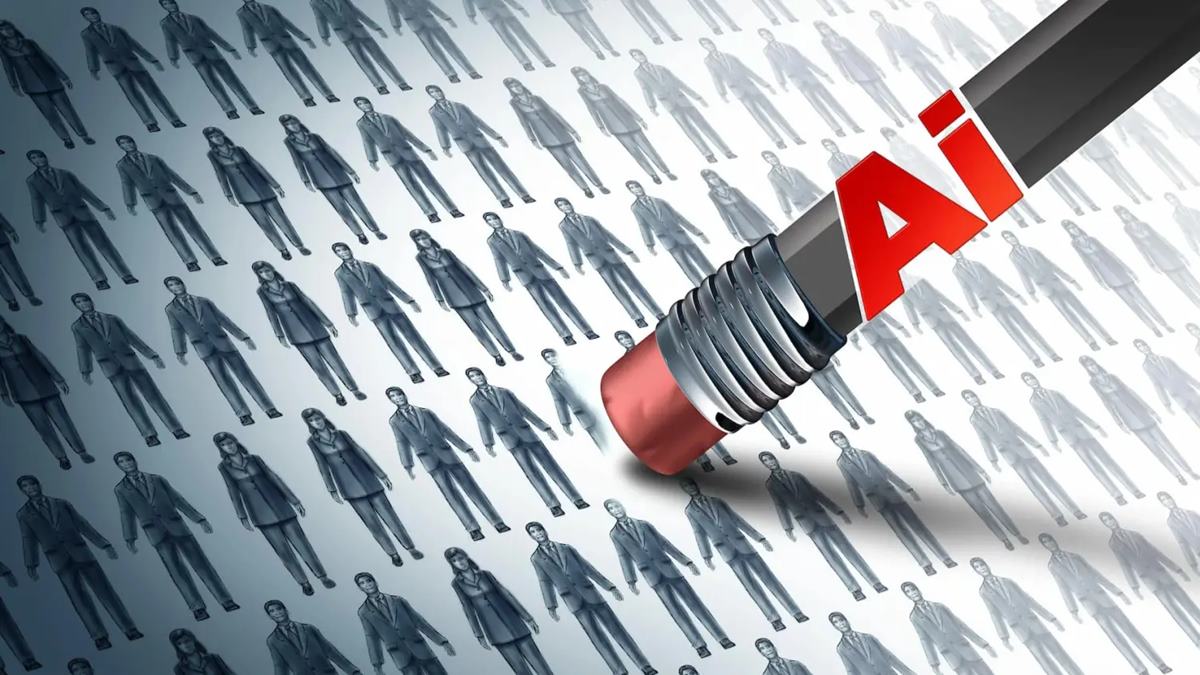
I want to speak directly about something that concerns me. There’s a risk that when HR automates its work, organizations simply eliminate all of the entry-level roles that used to be the on-ramp into the profession. That would be a mistake.
The early-career HR professional of five years ago answered benefits questions and processed onboarding paperwork. The early-career HR professional of five years from now manages AI knowledge systems, designs agentic workflows, analyzes interaction patterns for workforce insights and helps business units navigate human-AI integration. That’s not a downgrade. That’s a more exciting, more technical and more impactful career path. And it’s one that enterprises need to start building now.
The Two Paths
Every HR function is going to face a choice before the end of 2026.
The first path is just cost reduction: Automate the work and cut headcount. But if efficiency is the only goal, HR risks shrinking too much just as it’s being asked to lead the biggest workforce transition in decades.
The second path is transformation: Automate the operational layer, then deliberately build new capabilities. The organizations that do this won’t just modernize HR—they’ll redefine it while also improving efficiency, care and the employee experience.
When triage stops consuming the day, HR teams stop processing and start building. They go from answering questions to asking better ones—questions about how work flows, where it breaks and what the organization actually needs from its people function.
That’s where this is heading: HR with a fundamentally different and more interesting role.
Agentic AI is about to hand every HR function something it’s never had: real capacity, real leverage and entirely new capabilities. That shift is coming whether you plan for it or not. The question is whether you’ll seize the opportunity to build something amazing.