


















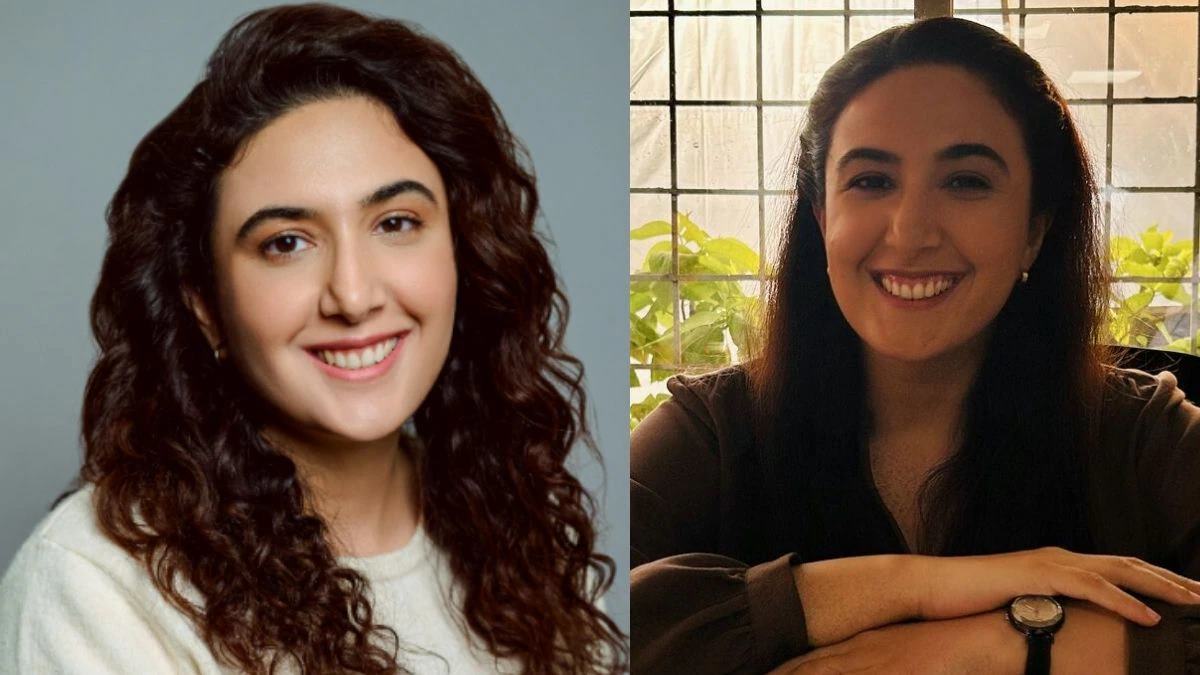
After nearly three years away from corporate work, Annapoorna Virdi returned to the job market in London with strong credentials, years of consulting and startup experience, and an MBA from Indian Institute of Management Ahmedabad. But despite that background, she faced months of silence from recruiters before redesigning her CV strategy from scratch.
Speaking exclusively with Financial Express Digital, Virdi said the experience forced her to rethink how modern hiring systems work, especially in competitive global markets like London.
“The doubt came from the silence,” she said. “London is a market with its own rules, and I was trying to crack it as someone new to it, with a non-linear CV, in a difficult hiring environment.”“It was something I had long planned for,” she said. “I always knew I’d take one, somewhere around the 8–10 year mark,” she added.
Virdi is an engineer by training and has worked across management consulting, startups, media, and creative projects over the last ten years. She moved to London in late 2024 after spending years across Mumbai, Delhi NCR, and Hyderabad.
The break began in mid-2023. What started as a planned three-to-six-month pause turned into something much larger. During that period, she worked as an actor, appeared in over 15 brand campaigns, explored sustainability work, and launched creative projects.
She worked on campaigns for brands including IKEA, Kurkure, Reliance JioMart, Urban Company and Groww. She also auditioned for Yash Raj Films.
“The sabbatical was a mix of excitement and real discomfort,” she said. “There were moments of feeling spread too thin,” she added. Now, she sees the break differently. “The sabbatical had structure underneath it,” she said. “I wasn’t just seeing what happened,” she added
Why did London job search become difficult?
Virdi said she entered the London market with confidence because of her educational and professional background. She had worked across consulting, startups, and creative industries. But the silence from recruiters slowly changed her experience.
“I thought it was a strong package. Objectively, it is,” she said. “The doubt came from the silence,” she added. She said London’s hiring market operated differently from what she had seen in India. Strong credentials alone did not guarantee interviews.
Recruiters relied heavily on systems, referrals, and highly specific role matching. “I assumed a strong CV would travel,” she said. “What I didn’t account for was how much filtering happens before a human ever sees your application,” she said.
According to her, applicants now need to optimize resumes not just for recruiters but also for applicant tracking systems, or ATS tools, which scan resumes before they reach hiring managers. “The work isn’t just being good,” she said. “The work is being legible,” she said.
Virdi also said the emotional side of job searching after a long break rarely gets discussed honestly. “You apply, you optimise, you apply again,” she said. “You get to the final round and receive a standard rejection with no feedback,” she said.
She added that the uncertainty became harder because she was still learning how the London market worked. “You don’t yet have the calibration to tell ‘this silence is normal’ from ‘this silence means something,’” she said.
What changed in Virdi’s resume strategy?
After repeated recruiter silence, Virdi approached the job hunt like a consulting problem. She broke the process into stages and studied how hiring systems worked. “The first insight was structural,” she said. “A CV is not a document. It is a data input into a system,” she added.
She said most candidates make the mistake of writing resumes for one imagined reader. In reality, resumes first pass through ATS filters, then HR scans, and finally hiring managers. “The real challenge is designing something that passes all those filters in sequence,” she said.
That insight changed how she built resumes. Instead of treating the CV as a timeline of achievements, she started treating it as a positioning document tailored for each role.
“I stopped thinking about the CV as a record of what I had done,” she said. “I started thinking about it as a specific argument for why this version of me is the right fit for this specific role,” she added.
She also rebuilt the format itself. A traditional chronological layout, she felt, buried the strongest parts of her experience because her background spanned consulting, startups, sustainability, and creative work. “I rebuilt around impact and relevance,” she said.
Her process also used AI tools, but she pushed back against the idea that AI alone could solve job searching problems. “Thinking is entirely human work,” she said. “If you haven’t done the positioning work first, the AI just produces a faster version of the wrong thing,” she added.
Eventually, the responses changed. Recruiters started contacting her for focused conversations instead of generic screening calls. “The shift happened when I stopped applying broadly and started applying precisely,” she said.
That process later became the foundation for her paid guide, called “The CV Operating System,” which she now sells through her social channels and Topmate profile.
What Annapoorna Virdi said about career breaks
Virdi said conversations around sabbaticals and career gaps often ignore identity loss and emotional strain. “Almost nobody talks about what happens to your sense of self when the job title disappears,” she said.
She believes career gaps have become more common than professional culture admits. Layoffs, caregiving, health issues, and personal breaks affect many professionals, but hiring conversations still treat gaps with suspicion.
“A gap is a gap,” she said. “It doesn’t erase what came before it,” she added. She also urged job seekers not to internalise every rejection during long hiring cycles. “Some of it is you,” she said, adding, “A lot of it isn’t.”
For Virdi, the return to structured organisational work did not mean abandoning creative ambitions. She said her sabbatical helped her understand the kind of work environment where she performs best. “I genuinely love the scale and texture that only comes inside an organisation,” she said. “The hard problems that require teams, resources, and multiple functions working in concert,” she said.
She now sees her career not as a straight line but as multiple parallel tracks that can exist together. “I believe one life can hold many lives inside it,” she said.