


















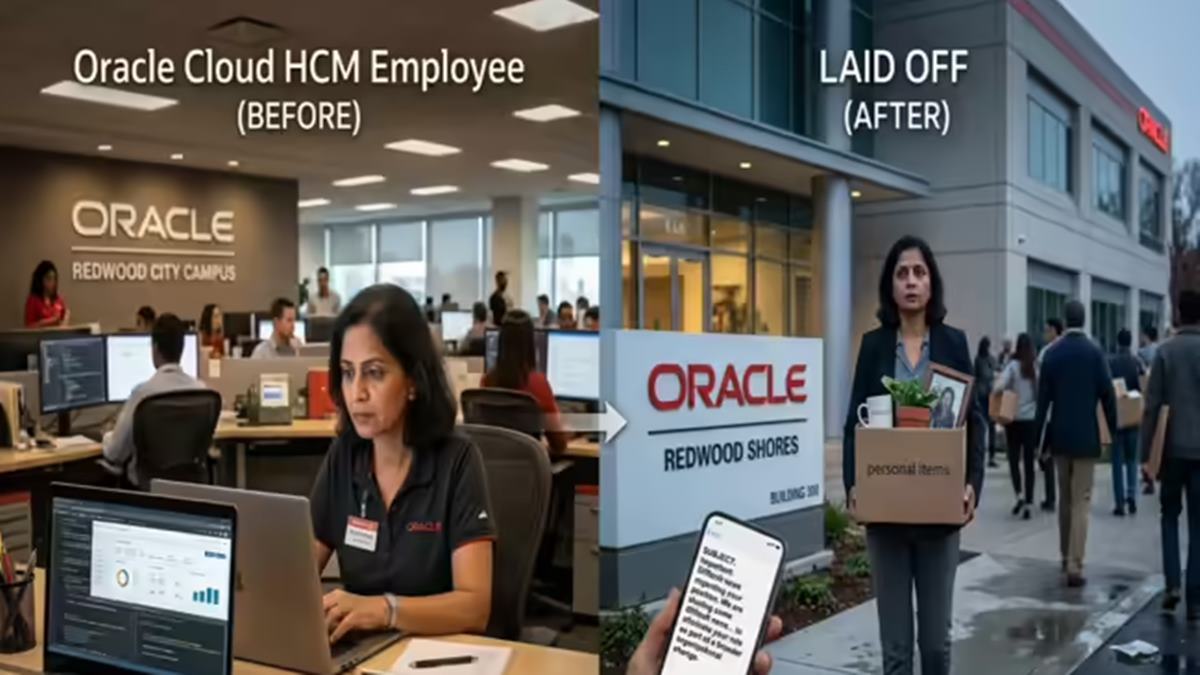
Weeks after US tech giant Oracle laid off as many as 30,000 employees globally with a brutal 6 am email, a post of one of the ex-employees, Nina Lewis, has gone viral. In the post, Nina, who spent over three decades at Oracle, allegedly suggested that layoffs may not have been as random as they seemed. Nina was also among the thousands of employees laid off by Oracle and mentioned that the news came as a shock to her and her message struck a chord with many, especially those who were also affected.
Oracle layoffs not random?
Nina Lewis, who most recently worked as a Security Alert with the IT company, suggested that the layoffs may not have been entirely random. “Well, after 34 (33 of them great) years at Oracle, I join the 30,000 or so laid off today. Quite a shock. Many of the absolute best colleagues were laid off as well,” she wrote.
“It seems layoffs follow an algorithm of high level individual contributors and mid-level managers — especially those with outstanding stock options,” she added, hinting that employees with higher compensation or equity may have been prioritised. “Not sure what to do next, if anything. Open to ideas,” she concluded.
Netizens were quick enough to notice her observation about how layoffs were decided at Oracle. Her post has since been echoed by several others who also lost their jobs this week.
According to her LinkedIn profile, Nina Lewis joined Oracle in 1992 as part of the Principal Technical Staff and steadily rose through the ranks over the years. She held the post of security alert manager from 2012 to March 2026, her longest recent role. Earlier, she held roles as senior principal ethical hacker and principal security analyst, conducting offensive security assessments and translating findings into risk insights for leadership.
How netizens reacted
The post struck a chord across the enterprise technology community. Debbie Steiner, another long‑tenured Oracle employee, responded that she too had been laid off. “I was just shy of my 30-year anniversary,” Steiner wrote to Lewis on LinkedIn.
“While I never directly worked with you, I know of your work and reputation. Whether you retire or take on a new endeavour, I know you’ll land.”
Iliia Karin, director of DevSecOps, AI and platform engineering, said, “30+ years of institutional knowledge doesn’t just disappear because a spreadsheet says so,” he wrote. “The people who built the systems are often the only ones who truly understand the ‘why’ behind them — not just the ‘what’.”
Kumar Bhatia of JPMorgan Chase commented, “Happy to see an acknowledgement that giant organisations like Oracle do have such algorithms and carefully identify the employees with outstanding stock options. It ensures that employees with outstanding contributions to the organisation are not randomly fired.”
Another LinkedIn user, Modi Fahad, an assistant at Diriyah Gate Development Authority, Riyadh, said, “I wish you all the best, but your story sends a clear message: no one should dedicate their entire life to a company they don’t own. Thirty-four years of dedication ended with a single decision. It’s a harsh but real reminder that job security is an illusion when it depends on others. It’s always better to invest in yourself, your skills, and build multiple sources of income rather than relying entirely on one entity.”