


















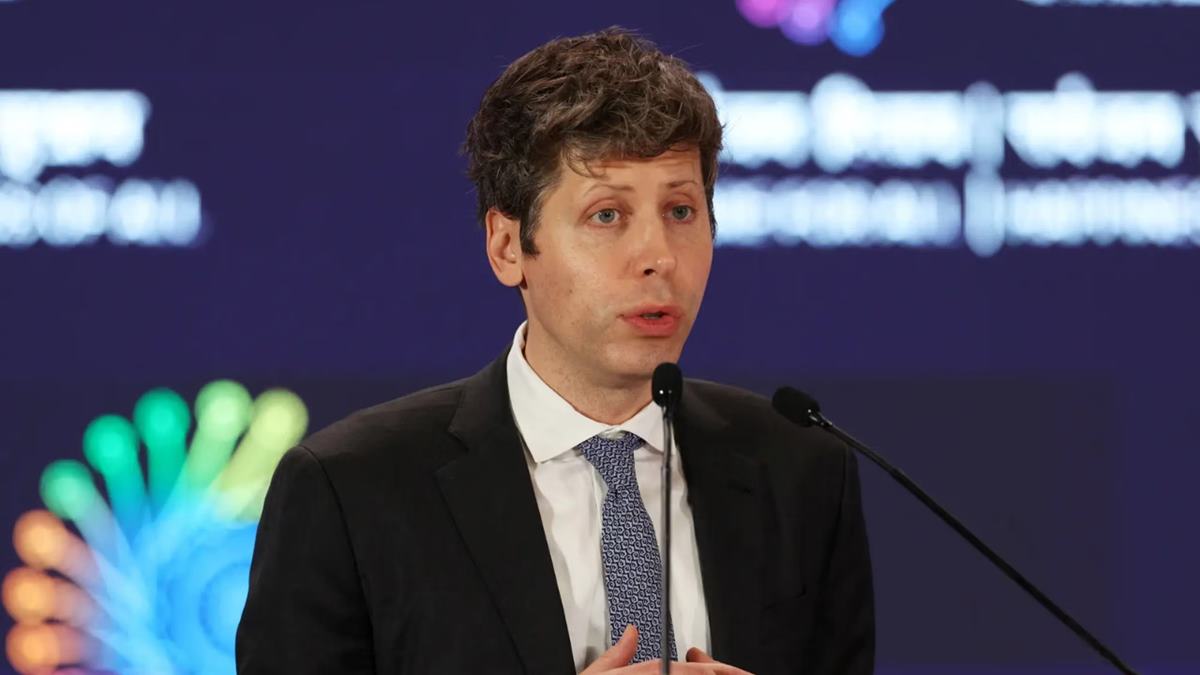
OpenAI chief executive Sam Altman has said some companies are overstating the role of artificial intelligence in recent layoffs, warning that “AI washing” is muddying an already complex debate over the technology’s impact on jobs.
Speaking to CNBC-TV18 at the India AI Impact Summit, Altman said businesses were, in some cases, attributing workforce reductions to AI that would likely have happened regardless.
“I don’t know what the exact percentage is, but there’s some AI washing where people are blaming AI for layoffs that they would otherwise do,” he said. At the same time, he acknowledged that “there’s some real displacement by AI of different kinds of jobs”.
The remarks land amid intensifying scrutiny of how generative AI is reshaping labour markets. Since the release of ChatGPT in late 2022, executives have oscillated between promises of productivity gains and warnings of significant white-collar disruption.
Yet emerging data presents a far less definitive picture.
A study published this month by the National Bureau of Economic Research found that nearly 90% of surveyed C-suite executives across the US, UK, Germany and Australia reported no impact from AI on overall employment levels over the past three years. The findings suggest that, so far, widespread job destruction linked directly to AI has not materialised.
Similarly, research from the Yale Budget Lab, drawing on US Bureau of Labor Statistics data through November 2025, found no significant shifts in unemployment duration or occupational mix among roles with high exposure to AI following ChatGPT’s launch. Martha Gimbel, executive director of the Yale Budget Lab, told Fortune earlier this month that “at this exact moment, it just doesn’t seem like there’s major macroeconomic effects here”.
Altman’s comments appear to align with that cautious interpretation. While acknowledging future disruption, he suggested current narratives may be overstated.
That stands in contrast to more alarmist forecasts from some industry leaders. Anthropic chief executive Dario Amodei has warned that AI could eliminate up to 50% of entry-level white-collar roles. Klarna’s chief executive, Sebastian Siemiatkowski, recently said the buy-now, pay-later firm could reduce its 3,000-strong workforce by a third by 2030, partly due to AI adoption. The 2025 World Economic Forum Future of Jobs Report found that around 40% of employers expect to reduce headcount in the coming years as AI reshapes operations.
Altman did not dispute that disruption is coming. “We’ll find new kinds of jobs, as we do with every tech revolution,” he said. “But I would expect that the real impact of AI doing jobs in the next few years will begin to be palpable.”
The divergence between corporate announcements and macroeconomic data has drawn wider economic commentary. Apollo Global Management’s chief economist Torsten Slok wrote in a recent blog post that AI currently appears “everywhere except in the incoming macroeconomic data”, echoing Nobel laureate Robert Solow’s famous observation during the personal computing boom that productivity gains were difficult to detect in national statistics.
Slok suggested AI’s economic effect could follow a so-called J-curve: heavy early investment suppressing short-term productivity, followed by a sharper acceleration once adoption matures.
Others argue that signs of change are beginning to surface. Writing in the Financial Times, Stanford economist Erik Brynjolfsson pointed to a decoupling between job growth and GDP expansion in recent US data. Fourth-quarter GDP tracked at 3.7%, while revised employment gains were pared back to 181,000. Brynjolfsson also cited a 2.7% year-on-year productivity increase, attributing part of that uplift to AI’s early benefits.
In a separate study last year, Brynjolfsson found a 13% relative decline in employment among early-career workers in roles with high AI exposure, while employment among more experienced workers remained stable or increased. He described 2025 data as potentially marking a transition from an “investment phase” to a “harvest phase” in AI deployment.
Against that backdrop, Altman’s intervention introduces nuance into a polarised debate. If AI washing is occurring, it risks distorting policy responses, investor expectations and workforce planning.
Companies facing margin pressures, geopolitical uncertainty and cautious consumer demand may find it expedient to frame restructuring under the banner of technological transformation. But overstating AI’s immediate impact could undermine trust — both internally with employees and externally with regulators and markets.
For now, the labour data does not point to broad-based AI-driven job losses. At the same time, few economists expect the technology’s long-term impact to be neutral.
Altman’s position reflects that middle ground: some exaggeration, some early displacement, and more visible effects ahead.
“The real impact… will begin to be palpable,” he said.
Whether that impact arrives gradually or abruptly may determine whether the current debate over AI and jobs proves premature — or merely early.