



















In many workplaces across the US, employees who voice their issues and concerns have been met with the same response that may seem harmless but is actually quite discouraging. The response is to “stay positive.” The phrase may seem to promote and support the employee, but it can actually silence the discussion that needs to take place.
The response to the problem is to focus on the need to stay positive instead of engaging in the discussion that needs to take place. The problem is that this response can prevent discussion from happening at all. The issue has been highlighted in research into workplace culture.
In reporting this, IndustryWeek highlighted that there is often a sense of concern that is ignored, and that the perception of management is that everything is harmonious.
Why Managers Default to Positivity
One of the reasons why certain managers practice positivity is due to psychological self-protection, as they might view the acknowledgment of certain issues as a failure or weakness on their part as leaders. Through the promotion of positivity, certain managers can avoid the discomfort of the situation, thus maintaining control over the image of the workplace from both internal and external perspectives.
According to Maryam Kouchaki, a professor at Northwestern University’s Kellogg School of Management, leaders can become blind to the problems of the organization when they identify themselves with the image of the organization, as mentioned in IndustryWeek. Leaders might have difficulty dealing with certain feedback, especially when the employees are already experiencing certain issues.
In the aforementioned situation, positivity does not necessarily mean support, but rather maintaining the image of the workplace as if everything is going well, even if it is not.
Emotional Intelligence and Communication Gaps
The other reason for the reaction lies in the low emotional intelligence of the manager, which influences the way the manager handles the concerns of the employees. Emotional intelligence refers to the ability of the manager to recognize the emotions, validate them, and respond to the concerns of the employees in a way that promotes trust.
According to research conducted at Yale University, emotionally intelligent leaders build more productive and satisfied teams. They respond to the concerns of the employees instead of ignoring them. Managers with low emotional intelligence, on the other hand, may offer generalized reactions instead of actively listening to the concerns of the employees.
This leads to a communication disconnect, where the employees feel that the manager does not understand the full nature of the experience.
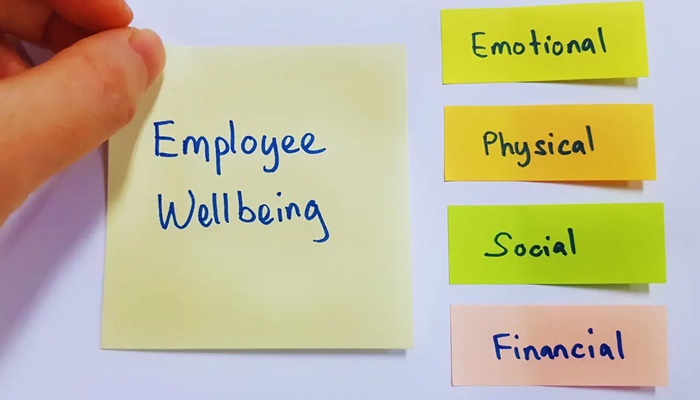
The Impact on Employee Wellbeing
Being asked to stay positive in the face of actual challenges and difficulties can also cause more stress and emotional pressure for the employee. Rather than receiving support, the employee may feel that they are supposed to stifle their concerns in order to conform to the ideal attitude in the workplace.
According to research presented by the Science of People, this sort of pressure to stay positive is also connected to what psychologists refer to as toxic positivity, in which negative emotions are denied rather than processed. This can result in emotional exhaustion, decreased job satisfaction, and feelings of alienation. Employees may also become disconnected from their work because they feel that their voice does not contribute to real change. This can eventually result in turnover as they seek to work in places where their concerns are taken seriously.
The Cost of Avoiding Real Conversations
However, avoiding difficult conversations does not help to avoid the problem. It instead allows the problem to grow. Problems like workload imbalance, conflicts between team members, and inefficiencies can be bigger if they are not addressed.
Industry Week reporting on the subject reveals that avoiding difficult conversations can also result in future problems for the company. For example, it can result in a reduction of productivity and a lowering of morale. This is because the leader will be avoiding the problem instead of solving it.
This way of dealing with difficult conversations can also be a way of maintaining power imbalances. This is because the employees will be discouraged from speaking out in the future.
Culture and the Pressure to Appear Positive
This is especially true in the workplace culture that maintains this type of atmosphere. A workplace culture that focuses on having a consistently positive outlook can make it difficult for employees to communicate openly if they feel as though they must have this type of outlook even when they are having a difficult time. According to research that was done at Yale, cultures that focus on emotional awareness and communication tend to have better performance because employees feel comfortable sharing their ideas and thoughts. On the other hand, cultures that discourage negative communication tend to have problems that they have yet to resolve.
A Subtle but Significant Signal
The phrase “stay positive” may seem harmless, but if used in the wrong context, it could reveal a larger underlying concern in the way communication is conducted in the workplace.
Studies on workplace research have shown that acknowledging concerns does not weaken an organization, but rather makes it stronger. A balance between positivity and addressing concerns is vital for a healthy work environment.
This phenomenon will help employees and management distinguish between encouragement and avoidance, which is a step towards developing a workplace where concerns are not only heard but also addressed.