
















Let’s be honest about what just happened. In the last thirty days, four of the world’s most powerful technology companies quietly released AI agents that can do the work of analysts, coders, customer service executives, content writers, and back-office operators. Not someday. Right now. And while Indian GenZ was busy picking sides in the Cockroach Janta Party debate that consumed every group chat from Patna to Pune, the displacement already started.
The timing is almost surgical. The internet gave Indian GenZ their first real political opinion cycle. The tech industry used that exact window to automate away the jobs they were about to interview for. This is not a coincidence. This is just how fast things move now.
Microsoft Opened the Floodgates First
At Build 2026 in San Francisco, Microsoft made agent mode the default setting inside Office 365 Copilot. That single line means that every enterprise subscription already running across Indian IT service companies, the TCSes, Infosyses, Wipros, now ships with an AI that can autonomously handle emails, summarise documents, draft reports, manage workflows, and coordinate between applications without a human in the loop. Microsoft also launched its computer-using agents in Copilot Studio, meaning these systems now navigate actual software interfaces just like a human employee would. The work of a junior analyst, paralegal, or back-office coordinator is now table-staked into a corporate subscription.
Google Dropped Gemini Spark, a 24/7 Personal AI Employee
Google I/O 2026 introduced Gemini Spark, a personal AI agent that runs around the clock on dedicated virtual machines and manages email, coordinates multi-step tasks across Google Workspace, and connects to Sheets, Calendar, and Gmail simultaneously. It never sleeps. It never asks for increments. For India’s GCC sector, Global Capability Centres that collectively employ hundreds of thousands, a Zinnov and Indiaspora analysis from March found that 55 percent of GCC work sits in the two tiers most directly replaceable by agents. Google is not waiting for companies to adapt. It already sold them the replacement.
Nvidia Built the Engine Underneath All of It
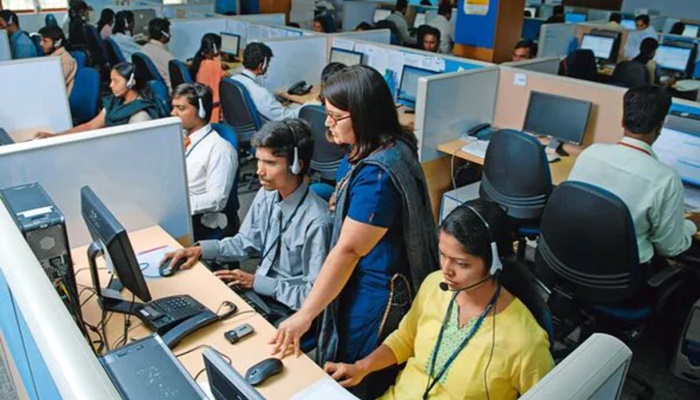
Nvidia’s Nemotron 3 Ultra, the company’s newest open enterprise AI model, delivers 5x faster inference at 30 percent lower cost compared to previous generations and is specifically optimised for long-running autonomous agents. The real gut-punch for India: Infosys, Wipro, Tech Mahindra, and Persistent Systems all showed up at the India AI Impact Summit to announce they were deploying Nvidia-powered agentic platforms. Wipro’s WEGA platform already handles 42 percent of inbound calls for a major US healthcare insurer, fully autonomously. These are not pilots. These are production systems replacing the exact call centre and back-office roles that have absorbed Indian graduates by the lakhs.
Perplexity Automated the Research Job
Perplexity’s Computer, launched in February, now moves into the enterprise and takes direct aim at Microsoft and Salesforce. It orchestrates 19 different AI models to complete complex, long-horizon tasks. At Computex 2026, Perplexity revealed a hybrid local-cloud inference system that routes tasks between device and cloud automatically, processing sensitive data on-device for privacy and pushing complex tasks to the cloud. The research analyst, the content strategist, the market researcher, these roles have a new, tireless, unpaid competitor.
The Numbers Are Already Moving
India’s largest IT firm TCS, which laid off 12,000 workers last July, plans to hire just 25,000 fresh graduates this financial year, against an average of 40,000 over the last three years. Goldman Sachs data shows AI is cutting 16,000 jobs per month in the US, and entry-level workers, the GenZ cohort, are absorbing the worst of it. CNBC reported in April that India’s IT sector’s mass hiring era is over: gross recruitment by major firms dropped from an average of 230,000 annually to around 170,000 this year. India’s IT firms are not investing in retraining. They are investing in agents.
The Cockroach Janta Party debate was funny. The memes were solid. The outrage was real. But while the timeline was in flames over a Bihar political metaphor, the actual employment pipeline for Indian GenZ was being systematically automated out of existence by companies that were not debating anything. They were shipping.
With the current situation of India’s AI industry, and unskilled/unware upcoming generation on the advancements of technology, future really doesn’t look bright for the country.